We Design Extraordinary Things
UX Design for Healthcare Portfolio Banner Image.webp

Healthcare UI/UX Design Agency

The Skins Factory designs healthcare UI/UX for healthtech, medical, pharma, nursing, fitness and physician reference applications. We help teams create patient and provider experiences that are easier to use, more accessible and better aligned with complex healthcare workflows.

Medical UX  ·  HealthTech  ·  Pharma

Healthcare UI/UX Design Agency
for Healthtech, Medical & Pharma

Enhancing Healthcare, One Interface at a Time.

At The Skins Factory, we pioneer healthcare UX design by leveraging our expertise as a world-class design studio to create innovative, user-centered solutions that transform patient and provider experiences. Our approach combines cutting-edge design principles with a deep understanding of the unique challenges and needs within the healthcare industry. By prioritizing intuitive, accessible, and efficient interfaces, we ensure that our designs enhance user engagement, streamline workflows, and ultimately improve patient outcomes. Our user experience designers have worked on countless medical, healthcare, healthtech, fitness, pharmaceutical, nursing, and physician reference apps. Here is a look at a few of them:

Healthcare and HealthTech UX Design Portfolio | The Skins Factory
25+
Years in business
60+
Microsoft projects
250+
Projects delivered
5.0/5
Clutch rating
 

From Ideation to Realization

Healthcare products are built to support care. The best ones are built to improve outcomes.

We design UI/UX for healthcare, healthtech, medical software, patient portals, provider platforms, pharmaceutical applications, and clinical tools, creating web, mobile, and desktop experiences that help users move through complex healthcare workflows with clarity, confidence, and efficiency. Whether you need to design a product from scratch, modernize a legacy interface, or improve a poorly performing platform, we reduce friction, increase engagement, and create better digital experiences for patients, providers, and healthcare teams.

Healthcare and Healthtech UI/UX Design

What Kind of Healthcare Product
Are You Designing or Redesigning?

Healthcare software spans patient-facing, provider-facing, clinical, administrative, pharmaceutical, medical-device, and AI-enabled products. We design mobile, web, tablet, and desktop experiences around the users, workflows, data, and operational realities specific to each healthcare product.

mHealth and Connected Health App UI/UX Design

Mobile health applications for patient engagement, care plans, health scoring, medication management, wellness, wearables, connected devices, and secure health-data experiences. Our work includes the Patientory healthtech mobile app, a connected-health platform spanning more than 90 iOS screens.

Patient Portal Design and Redesign

Patient-facing portals for registration, scheduling, medical records, test results, secure messaging, billing, forms, care plans, account management, and communication. We organize these experiences around clarity, accessibility, trust, and the actions patients need to complete without unnecessary support.

Provider Portals and Healthcare Operations Software

Provider-facing platforms for referrals, authorizations, eligibility, care coordination, documentation, performance, reporting, and medical-practice operations. InnovaMD, an Anthem company, selected us for one provider-platform redesign and returned several years later for a fundamentally different portal engagement.

EHR, EMR and Practice Management Software

Chart review, clinical documentation, orders, medication lists, scheduling, billing, insurance verification, patient histories, alerts, claims, referrals, staff workflows, permissions, and administrative operations designed for greater speed, clarity, and continuity of care.

Telehealth, Virtual Care and Remote Patient Monitoring

Appointment setup, patient intake, virtual waiting rooms, video visits, secure messaging, connected-device data, patient-generated health information, thresholds, alerts, adherence, escalation, clinician review, follow-up, and care coordination.

Healthcare AI Integration and Clinical Copilots

AI copilots, clinical summarization, intelligent search, workflow assistance, predictive insights, recommendation interfaces, and human-review experiences designed around trust, transparency, and control. Explore our AI and Agentic UI/UX design capabilities.

Clinical Decision Support and Patient Discharge Software

Analytics, risk indicators, facility comparisons, clinical recommendations, discharge planning, and next-step guidance for nurses and care teams. We designed HomeFirst by CareCentrix, an iPad application used by hospital nurses to evaluate outcomes and support patient-discharge decisions.

Radiology and Diagnostic Imaging Platforms

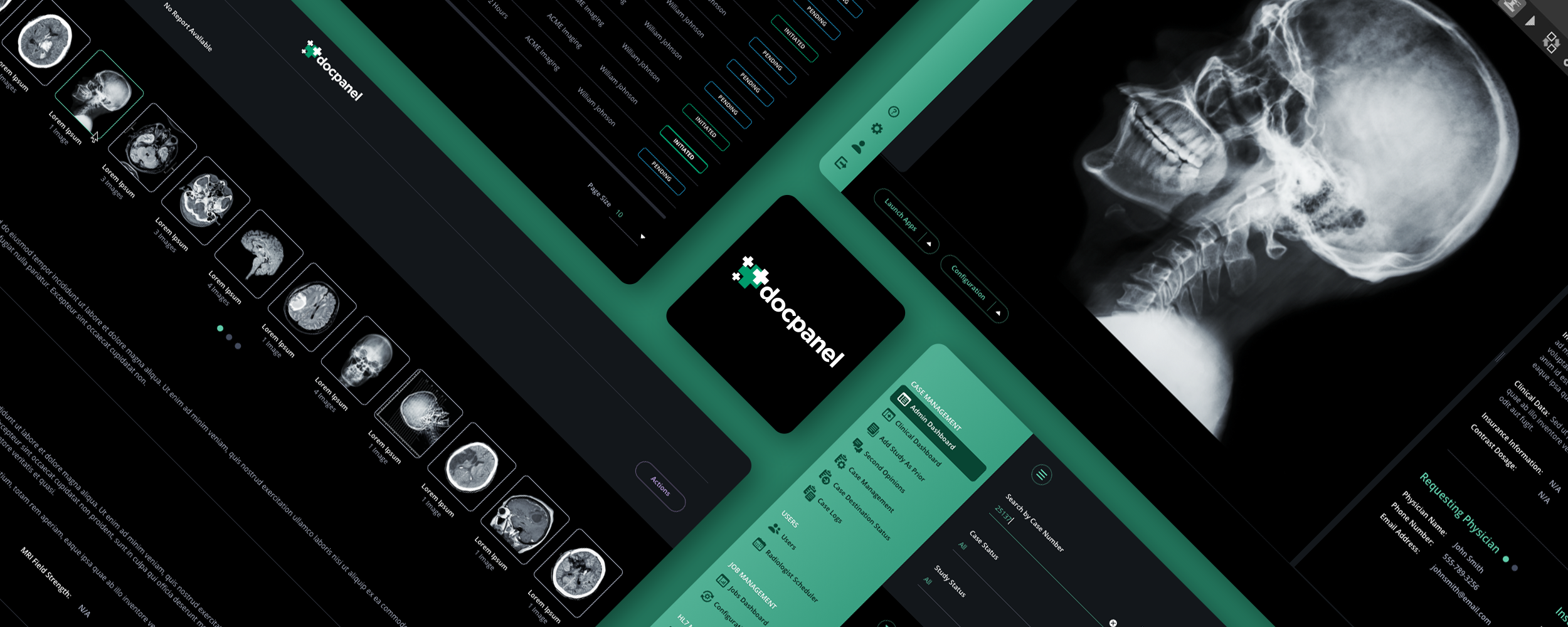
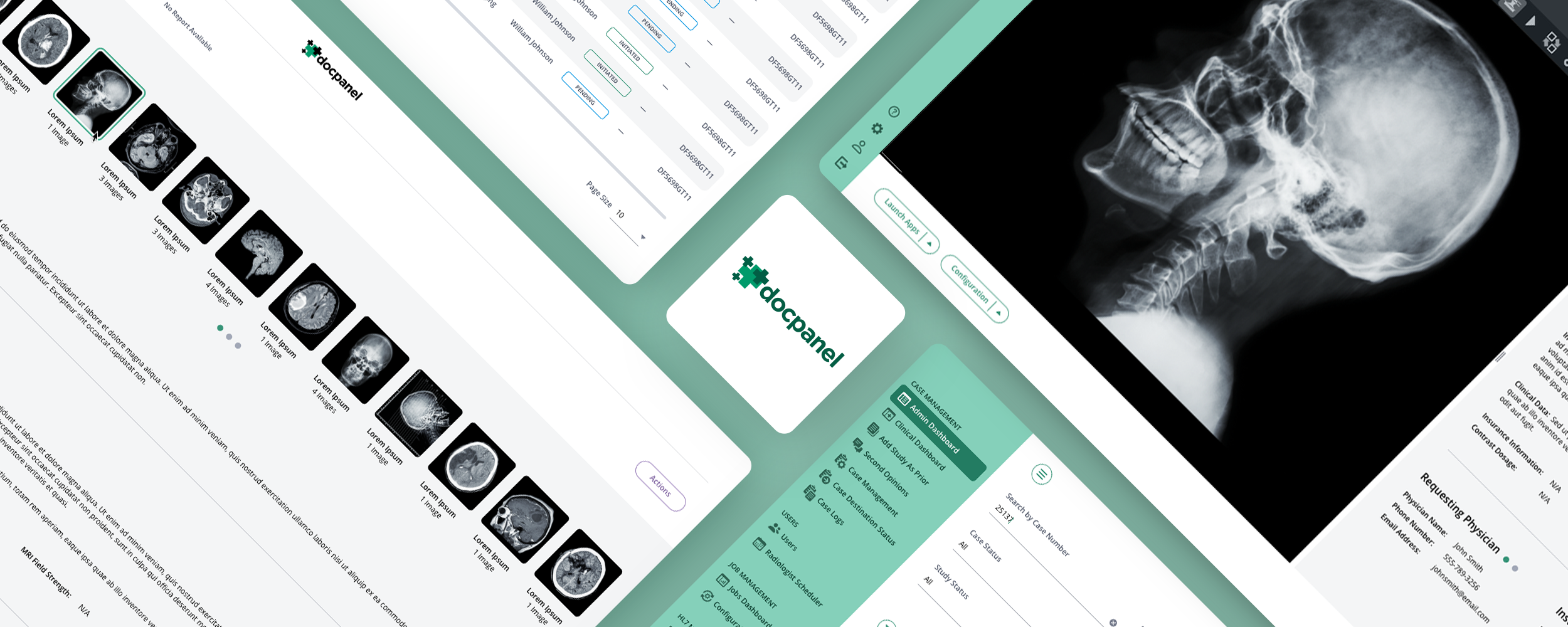
Imaging cases, radiologist assignments, reading workflows, patient records, provider communication, order status, reports, administrative tools, and high-density clinical information. Our work includes the DocPanel radiology marketplace, designed for radiologists, imaging providers, administrators, and patients.

Pharmaceutical, Pharmacy and 340B Platforms

Pharmaceutical analytics, 340B workflows, contract-pharmacy management, medication data, eligibility, inventory, reporting, and operational dashboards. Our confidential healthcare SaaS work includes a Pharma Analytics Application and a separate 340B Contract Pharmacy Management platform.

Caregiver, Special Needs and Behavioral Support Apps

Digital experiences for caregivers, parents, therapists, teachers, support teams, and people with cognitive or sensory needs. Our MY24 mobile app included task management, rewards, scheduling, communication, activity tracking, individualized workflows, and a sensory-conscious visual approach.

Physician Directories and Provider Search Applications

Provider discovery, specialties, locations, filtering, referrals, contact information, network navigation, and fast access to the right medical professional. We redesigned the Broward Health Physician Directory mobile app to help physicians quickly redirect patients within the network.

Medical Device and SaMD Interface Design

Device controls, companion applications, setup, calibration, diagnostics, guided procedures, monitoring, system status, safety-critical feedback, and recovery states for connected medical devices and software-driven healthcare products.


What Does Your Healthcare Product
Need Right Now?

Whether you are launching a new healthcare product, modernizing an established platform, or trying to fix a workflow that frustrates patients and providers, the right engagement starts with the problem your product team needs solved now. We help healthcare organizations turn complicated requirements and clinical workflows into clearer, more usable digital experiences.

Design a New Healthcare Product

Turn an early concept, requirements document, clinical workflow, or working prototype into a clear product experience ready for development, testing, funding, or launch.

Redesign an Existing Healthtech Platform

Modernize a healthcare product that works technically but feels outdated, inconsistent, difficult to navigate, or no longer capable of supporting its users and roadmap.

Modernize a Legacy Clinical Interface

Improve clarity, speed, and visual organization without disrupting the familiar workflows clinicians, administrators, and operational teams depend on every day.

Improve Patient Onboarding and Intake

Simplify registration, insurance information, consent, medical-history collection, forms, scheduling, and account setup so patients can complete necessary steps with less confusion.

Simplify Provider Workflows

Reduce unnecessary steps across chart review, documentation, referrals, approvals, care coordination, and administrative tasks so providers can focus on the work that matters.

Redesign Clinical Dashboards

Reorganize patient information, alerts, clinical data, performance metrics, exceptions, and next actions around the decisions users need to make.

Build or Repair a Design System

Create consistent components, forms, tables, clinical states, alerts, navigation, and interaction patterns that help product and engineering teams work more efficiently.

Improve Accessibility and Plain Language

Make instructions, forms, navigation, status messages, and patient-facing content easier to perceive, understand, and use across a wider range of abilities and circumstances.

Support an Overloaded Product Team

Add senior UI/UX design capacity when your internal team is stretched thin, development is moving faster than design, or an important release needs experienced support.

Start With a Healthcare UX Audit

Identify usability problems, workflow friction, accessibility issues, design debt, inconsistent patterns, and missed opportunities before committing to a larger redesign.

Selected Work

Featured Healthcare & Healthtech UI/UX Design Projects

The capabilities above show the range of healthcare and healthtech products we design. The featured projects below go deeper into our work across provider portals, clinical decision-support software, mHealth applications, radiology platforms, pharmaceutical analytics, 340B pharmacy management, special-needs applications, and other patient-facing and provider-facing digital experiences.

Each project demonstrates how The Skins Factory combines user research, workflow strategy, visual hierarchy, interaction design, accessibility considerations, and scalable UI systems to make complicated healthcare software clearer and easier to use. For additional work across healthcare, fintech, SaaS, cybersecurity, enterprise software, and more, explore our Main UI/UX Design Portfolio .

DocPanel Healthcare Platform

Radiology Reading Services. Healthcare Web Application UI/UX Design.

Redesigning the World's Largest Radiology Marketplace: A Healthtech UI/UX Case Study by The Skins Factory
DocPanel, the world's largest radiology marketplace, connects imaging providers and patients to a network of more than 700 US-based academic and subspecialty radiologists. Our UI/UX design team created a clean, polished visual language that uses generous white space to improve clarity and reduce eye fatigue. Inspired by the timeless character of mid-century design, the interface combines refreshing mint green with deep charcoal grays and bold blacks, creating a sophisticated healthcare platform with an understated, professional feel.

InnovaMD Healthcare Portal

Healthcare Provider Portal. Web Application UI/UX Design.

The Skins Factory’s Second Engagement Designing an InnovaMD Healthcare Portal
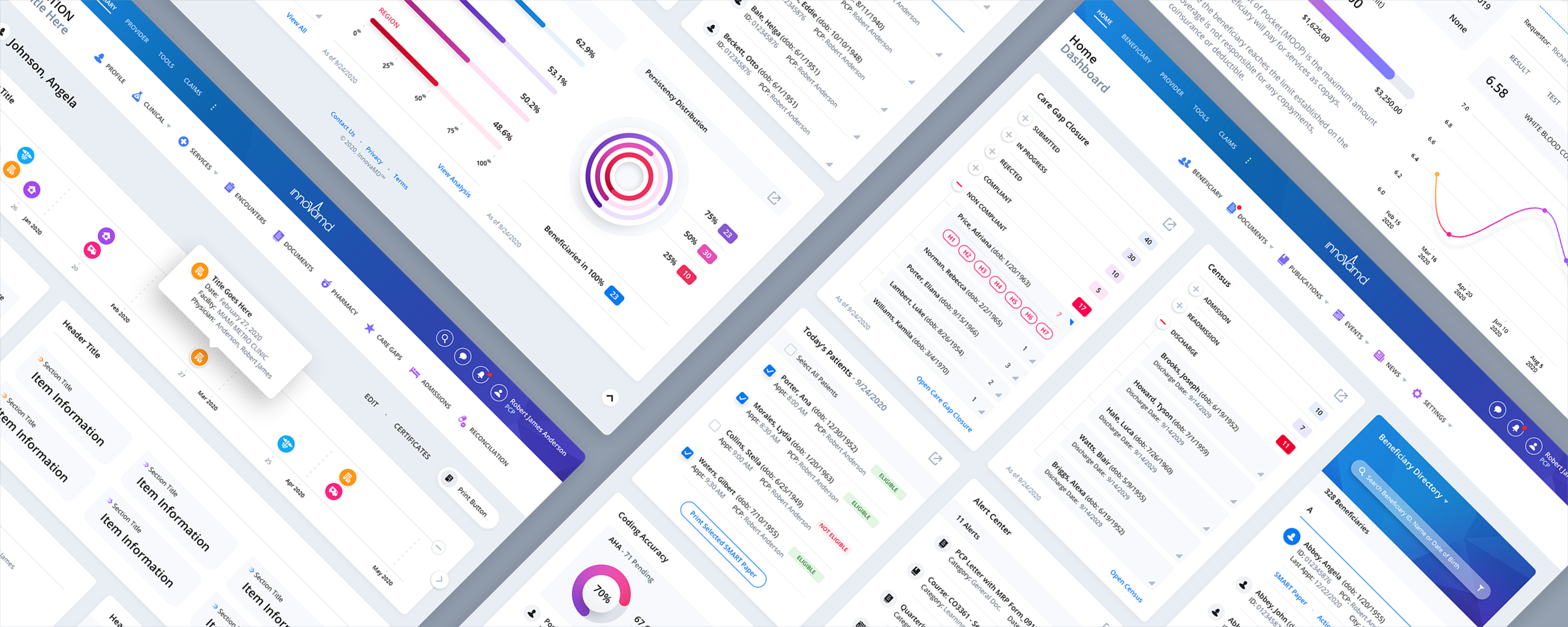
The Skins Factory was brought back to design a fundamentally different healthcare portal for InnovaMD, an Anthem company. The discovery phase began with two weeks of user research and interviews involving physicians, clinic administrators, and office personnel. These conversations revealed the specific pain points users were experiencing with the prior version of the platform and helped our team identify where usability, workflow, navigation, and interaction design needed to improve. The resulting portal was shaped around the real needs of the healthcare professionals and administrative teams using it every day.

InnovaMD healthcare provider portal web application UI and UX design by The Skins Factory

Patientory, Inc.

mHealth and Healthtech Mobile App UI/UX Design

Designing a Blockchain-Driven Healthtech App: How The Skins Factory Gamified the Patientory iOS Experience
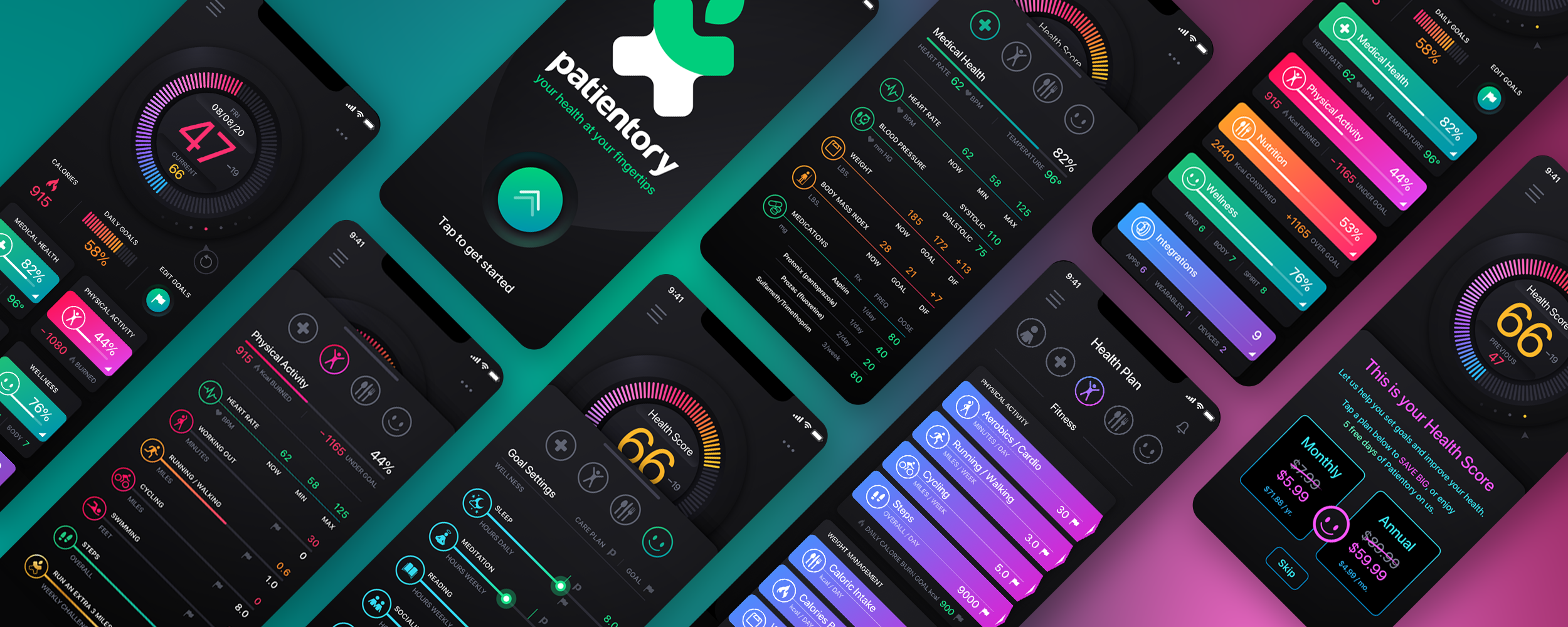
Our team designed more than 90 static and animated iOS screens for Patientory, combining 2D, neumorphic, and skeuomorphic design elements to create a more tactile and game-like mobile experience. The mHealth application connects health apps, devices, and wearables while using blockchain technology to help manage and transfer patient health data. The experience also incorporated cryptocurrency payments, health scoring, care plans, questionnaires, progress tracking, and other patient-engagement features within one cohesive mobile platform.

Patientory mHealth and connected health mobile app UI and UX design by The Skins Factory

Pharma Analytics Application

Pharmaceutical Analytics. 340B Management. Web Application UI/UX Design.

Transforming a Complex 340B Management Application Through Clearer Workflows and a Modernized Interface
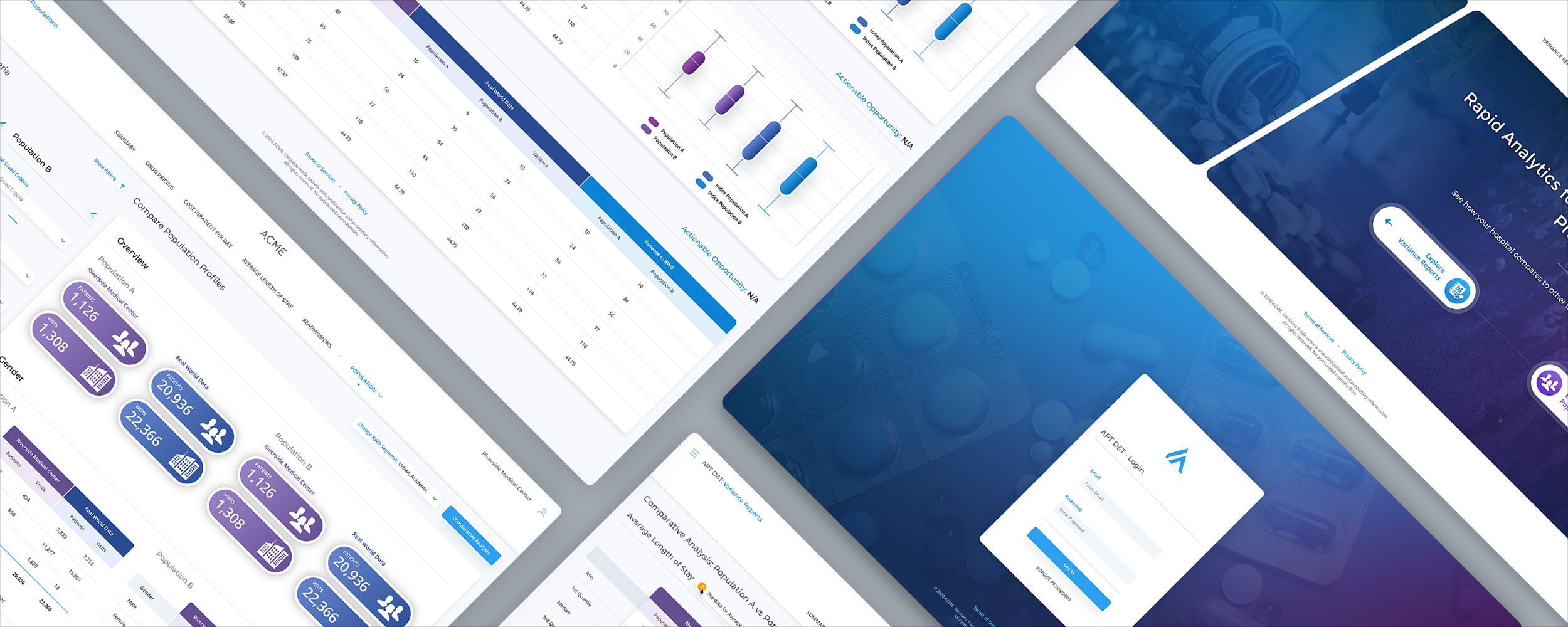
A confidential pharmaceutical-services client selected The Skins Factory for two separate healthcare SaaS redesign projects. For this responsive pharma analytics application, our primary objective was to improve usability across complex 340B management workflows while introducing a cleaner, more contemporary visual design language. We reorganized dense information, modernized the interface, and created clearer interaction patterns that made the platform easier to navigate without reducing the operational depth required by its users. The client and product names shown in the case study were changed to preserve strict confidentiality.

Pharma analytics and 340B management web application UI and UX design by The Skins Factory

340B Contract Pharmacy Management

Pharmaceutical Operations. Healthcare SaaS Web Application UI/UX Design.

Redesigning a Complex 340B Contract Pharmacy Management Platform for Greater Clarity and Efficiency
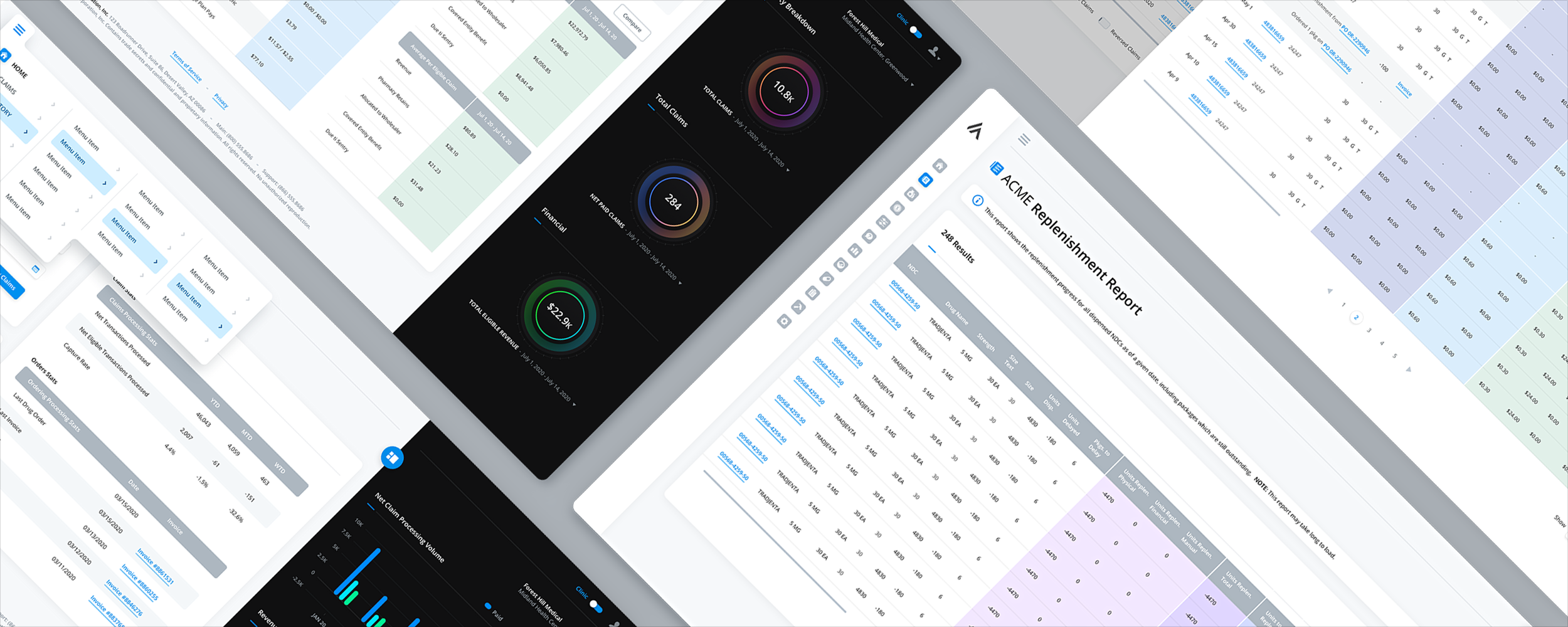
This project was the second of two healthcare SaaS redesign engagements completed for a confidential pharmaceutical-services client. Our team modernized the responsive browser application with a crisp visual language and clearer interaction patterns designed to improve usability across complex pharmacy-management workflows. We replaced traditional modal windows with slide-in panels that allowed users to complete tasks without losing context, and reorganized extremely wide operational tables using colored vertical columns to make dense information easier to scan, compare, and manage. The client and product names shown in the case study were changed to preserve strict confidentiality.

340B contract pharmacy management healthcare SaaS web application UI and UX design by The Skins Factory

Engagement Models

Two Ways to Work With Us

Some healthcare organizations need a complete product-design engagement. Others need experienced UI/UX support integrated into an active product roadmap. We offer both, so the engagement can match the scope, pace, and stage of your healthcare product.

Full Engagement

Complete Healthcare Product Engagement

Best suited for new healthcare products, major platform redesigns, legacy modernization initiatives, complex clinical workflows, and complete design-system engagements. We guide the product from discovery and early concepts through high-fidelity UI/UX design, interactive prototypes, reusable components, and developer-ready source files.

Ongoing Support

Fractional Healthcare Design Support

Best for ongoing feature design, clinical workflow improvements, patient and provider experiences, healthcare AI integration, UX debt, design-system maintenance, and product teams that need experienced design support without another full-time hire. Our fractional engagement begins with a 40-hour monthly block, and priorities can shift as your roadmap evolves.

Designed Around the Moments
Where Healthcare UX Has Real Consequences

In healthcare and healthtech, poor UX does more than frustrate users. It slows teams down, introduces avoidable errors, creates administrative burden, and makes already complex workflows harder to manage. We design around the moments where clarity, safety, efficiency, and trust matter most.

Clinical Decisions and Patient Safety

Key information, status changes, and next-step actions need to be easy to find and hard to misread when clinicians are working quickly.

Patient Comprehension and Task Completion

Whether the user is scheduling care, reviewing information, or completing a form, the experience has to feel understandable, guided, and trustworthy.

Accessibility, Trust, and Error Prevention

Healthcare interfaces need to be inclusive, readable, and resilient, with strong hierarchy, clear confirmations, and safeguards that help prevent mistakes.

Provider Efficiency and Administrative Burden

We reduce extra clicks, repetitive tasks, unclear states, and navigation friction so providers and staff can move through work with less overhead.

Dense Medical Data and Complex Workflows

We organize dense datasets, layered workflows, and multi-role systems so the interface supports decision-making instead of adding cognitive load.

AI Recommendations and Human Judgment

When AI enters the workflow, clinicians and staff still need visibility, context, and control so recommendations support human judgment rather than obscure it.

Practitioner Perspectives

The Methodology Behind the Work

We do not believe in black-box design. Our approach to healthcare UI/UX is informed by more than 25 years of designing complex, trust-critical software across healthcare, fintech, cybersecurity, SaaS, and enterprise platforms. These articles are not generic marketing content. They share the strategic frameworks, UX principles, design-system thinking, and practical methods we apply to active client work. We publish them without gates because the best way to demonstrate expertise is to show how we approach difficult product-design problems.

Healthtech UI/UX design: why bad design decisions in healthcare have real consequences | The Skins Factory

Featured Article · 14 min read

Healthtech UI/UX Design: Bad Design Decisions Have Real Consequences

There is a version of bad design that costs a company a customer. There is another version that can feasibly cost a patient their health. In healthcare, you are frequently designing for the second scenario.

After decades of designing healthcare software across a radiologist marketplace, a nursing discharge application, a hospital pharmacy inventory system, a 340B management platform, and multiple patient-facing portals, we have seen healthcare UI from both sides of the exam table. This is what separates the products that work from the ones that fail.

From the Article

How should visual hierarchy work in a clinical dashboard?

In a clinical dashboard, what gets surfaced first is not a UX preference. It is a medical priority. Alerts before status, exceptions before routine, critical values before normal ranges. Every layer of the visual hierarchy has to reflect clinical logic rather than aesthetic convention. Getting it wrong does more than create a poor experience. It creates the conditions for error, because a fatigued clinician acts on what the interface emphasizes first.

Why do error states need more care in healthcare software than in other products?

In most software, an error state is a minor inconvenience. In healthcare, an error state often means something went wrong with a patient's care. A failed medication reconciliation is not the same as a failed form submission, and the interface should not treat them the same way. The copy, the visual treatment, and the recovery path all have to reflect the seriousness of the context, so the user understands what actually happened and what to do next.

Is plain language in patient-facing design just dumbing it down?

No. Medical terminology is precise and efficient for clinical communication, but it is opaque and frightening for patients. Moving to plain language is not a concession to a less sophisticated audience. It is an acknowledgment that clinical language and patient language are two different tools for the same goal. A discharge summary a patient actually understands and follows is better medicine than a technically accurate one that goes unread.

From Startups to Fortune 500 Companies
and All Points in Between

This is only a small sample of the clients that have relied on our commitment to design excellence for more than 25 years. What the logos do not show is how often those clients have returned after the first engagement: more than 60 projects for Microsoft, more than 13 for The Walt Disney Company , eight for Warner Bros. Entertainment, and seven for Alienware. While our history includes some of the world’s largest brands, our client roster also includes exceptional healthcare organizations, growing mid-sized companies, and ambitious startups building what comes next.


Testimonials

We think we're awesome, but don't take our word for it, see what our clients are saying.

"The journey and ultimately the results of their work provided us what we were looking to achieve."

ThyssenKrupp Elevator Americas

"Reaction from clients has been tremendous; many existing customers want to upgrade."

Missy Rose

Principal Product Manager, ACI Worldwide Universal Payments

"We are extremely happy with the new look and functionality. Skins did a great job."

James Christopher Roe

CTO, EDLY

"We spoke with a dozen companies before selecting The Skins Factory. We had a great experience."

David Anderson

CEO, LionDesk

"The Skins Factory's design work was a breath of fresh air. We found it outstanding."

Matthew Caballero

VP of Risk Management, COPAP

"The design they delivered was incredibly well done; it was visually awesome."

Michael Ducharme

VP of Product, CareCentrix

Clutch Reviews

The Skins Factory Reviews 5.0
12 Reviews
5.0

"The design they delivered was incredibly well done; it was visually awesome."

VP Product & Analytics, Healthcare Platform

Verified Review
5.0

"They were accessible, and their work was good."

Founder, Cryptocurrency App

Verified Review
5.0

"The Skins Factory valued our goals, and that was apparent in the quality of work they delivered."

VP of Risk Management, Supply Chain & Trade Finance Company

Verified Review
5.0

"The range of UI/UX work they have done and the companies they have designed things for - very impressive."

Software Development Manager, Healthcare Service Provider

Verified Review
5.0

"They know how color, texture, and design aesthetics work together to visually grab the viewer's attention."

Chief Design Officer (CDO), BioMojo LLC

Verified Review
4.5

"They delivered a modern and user-friendly platform that is sure to impress our user base."

Developer/Analyst, FleetFusion

Verified Review

Common Questions

Healthcare & Healthtech UI/UX FAQ

Straight answers about healthcare product costs, timelines, HIPAA-aware design, clinical workflows, AI integration, development handoff, and the real-world considerations behind our healthcare UI/UX work.

How much does a healthcare UI/UX design project cost?

Cost depends on the number and complexity of the workflows, product modules, user roles, platforms, research requirements, and the condition of the existing interface and design system. It also matters whether we are designing a new healthcare product from scratch, redesigning an existing platform, or modernizing one part of a larger system. After discovery, we define the scope, priorities, deliverables, and engagement structure so the investment is tied to the actual work rather than an arbitrary screen count.

How long does a healthcare product redesign take?

A focused healthcare workflow or application module may take several weeks. A complex platform with multiple user types, clinical workflows, administrative tools, responsive states, and a larger design system may take several months. The number of screens matters, but the amount of research, structural thinking, workflow definition, and stakeholder review usually has a greater impact on the schedule.

Can you redesign an existing healthcare platform without rebuilding everything?

Yes. A healthcare product does not always need to be replaced from the ground up to improve the experience. We can work within the realities of an existing architecture, identify the modules and workflows creating the greatest friction, and create a phased modernization plan. That may include redesigning high-impact areas first, improving the design system incrementally, and delivering work in stages that your engineering team can implement alongside the existing product.

How do you design for HIPAA-aware healthcare products?

We design healthcare interfaces with privacy and compliance considerations in mind, including how protected health information is displayed, what may be visible on shared screens, how sensitive actions are confirmed, and how consent, permissions, session states, and access controls are represented in the interface. We design the user experience; your legal, security, and compliance teams own the final interpretation and technical implementation of HIPAA requirements.

How is designing for patients different from designing for clinicians?

They are often nearly opposite design problems. Patients may use a product occasionally while stressed, unwell, or unfamiliar with medical terminology. They need plain language, reassurance, accessibility, and a guided path. Clinicians use healthcare software repeatedly under time pressure and need speed, information density, predictable interaction patterns, and fewer unnecessary steps. We design each experience around its actual users and context, including provider-facing nursing tools such as HomeFirst by CareCentrix.

Do you design for multiple healthcare roles and permission levels?

Yes. Healthcare platforms often serve physicians, nurses, administrators, office staff, patients, caregivers, support teams, and executives within the same product. We define what each role needs to see, what actions they can take, and how information and functionality should change based on permissions. This may include role-specific dashboards, navigation, workflows, data visibility, approval paths, and progressive disclosure of advanced functionality.

Do you research real clinical workflows before designing?

Yes. User research and stakeholder interviews can be an essential part of discovery. For the InnovaMD portal redesign, we spent two weeks interviewing physicians, clinic administrators, and office staff to identify the pain points and usability issues they were experiencing before the design process began. Designing healthcare software without understanding the real workflow is how products end up fighting the people expected to use them.

How do you validate healthcare workflows before finalizing the design?

Validation may include stakeholder interviews, user research, workflow mapping, clickable prototypes, usability reviews, and structured feedback from clinicians, administrators, product leaders, and subject-matter experts. We use those findings to identify unclear steps, missing states, unnecessary friction, and assumptions that do not match the way the work is actually performed before the experience is finalized for development.

Do you design healthcare AI copilots and AI-enabled workflows?

Yes. We design healthcare AI experiences around the workflow, not as a detached chat box added to the corner of the application. That includes clinical copilots, summarization, intelligent search, recommendations, predictive insights, and workflow assistance. The interface should establish a trust layer through clear sources, confidence indicators, review states, explanations, human approval, override controls, auditability, and thoughtful handling of incomplete or incorrect AI output.

Have you designed real healthcare and healthtech products?

Yes. Our healthcare work includes two provider portal engagements for InnovaMD, DocPanel's radiology marketplace, Patientory's connected-health mobile platform, Broward Health's physician directory application, and HomeFirst by CareCentrix, a provider-facing clinical decision-support and discharge-planning application for hospital nurses. We have also redesigned a confidential pharmaceutical analytics platform and a separate 340B contract pharmacy management application across web, mobile, and tablet experiences.

Why does UX matter so much in healthcare specifically?

Poor healthcare UX can increase cognitive load, slow clinical and administrative work, create avoidable errors, reduce patient comprehension, and make already complicated workflows harder to complete. A well-designed healthcare interface improves hierarchy, makes system status and next actions clearer, reduces unnecessary steps, and helps users make better decisions without digging through disconnected information.

What do developers receive at the end of the engagement?

Deliverables may include organized Figma source files, production-ready screen designs, responsive layouts, reusable components, interaction states, clickable prototypes, design-system guidance, visual assets, and documentation for important behaviors and edge cases. We also collaborate with product and engineering teams during handoff so developers understand the intended workflows, component logic, responsive behavior, and interaction details before implementation begins.

How do you measure whether a healthcare redesign is successful?

Success should be connected to the problems the redesign was meant to solve. Depending on the product, that may include improved task-completion rates, shorter workflow times, fewer user errors, reduced support requests, faster onboarding, greater feature adoption, improved patient engagement, or less administrative burden for providers and staff. We help define the relevant experience goals during discovery so the redesign can be evaluated against meaningful product and operational outcomes.

Healthcare and healthtech software UI UX design environment
THE REALLY, REALLY SHORT FORM

Have a Healthcare Project? Let's talk.

Thank you for reaching out.

We will be in touch within one business day.