We Design Extraordinary Things
the-ui-ux-design-agency-for-startups-preview-image.png

Startup UI/UX Design Agency

Startup UI/UX design agency helping founders and entrepreneurs turn bold ideas into real products with fixed-cost projects or fractional design support.

— For Founders, Entrepreneurs & STARTUPS

The UI/UX Design Agency for Startups

Product Design Can Be Overwhelming. We Got You.

Have an idea worth building but nothing designed yet? Maybe you have a rough build that works but doesn't look like something people would pay for. Either way, we take what you have and turn it into a real product, one your users understand and your investors take seriously.
You’ve come to the right place.

For more than 25 years, we've designed digital products for Microsoft, Disney, Intel, Bank of America, and the NFL. Big names, but you don't need a Fortune 500 budget to work with us. Startups come to us for a fixed-cost project or a fractional engagement, whichever fits where you are. We figure out what the product needs to do, map how people move through it, and design an interface your developers can build from without guessing.

Get in touch
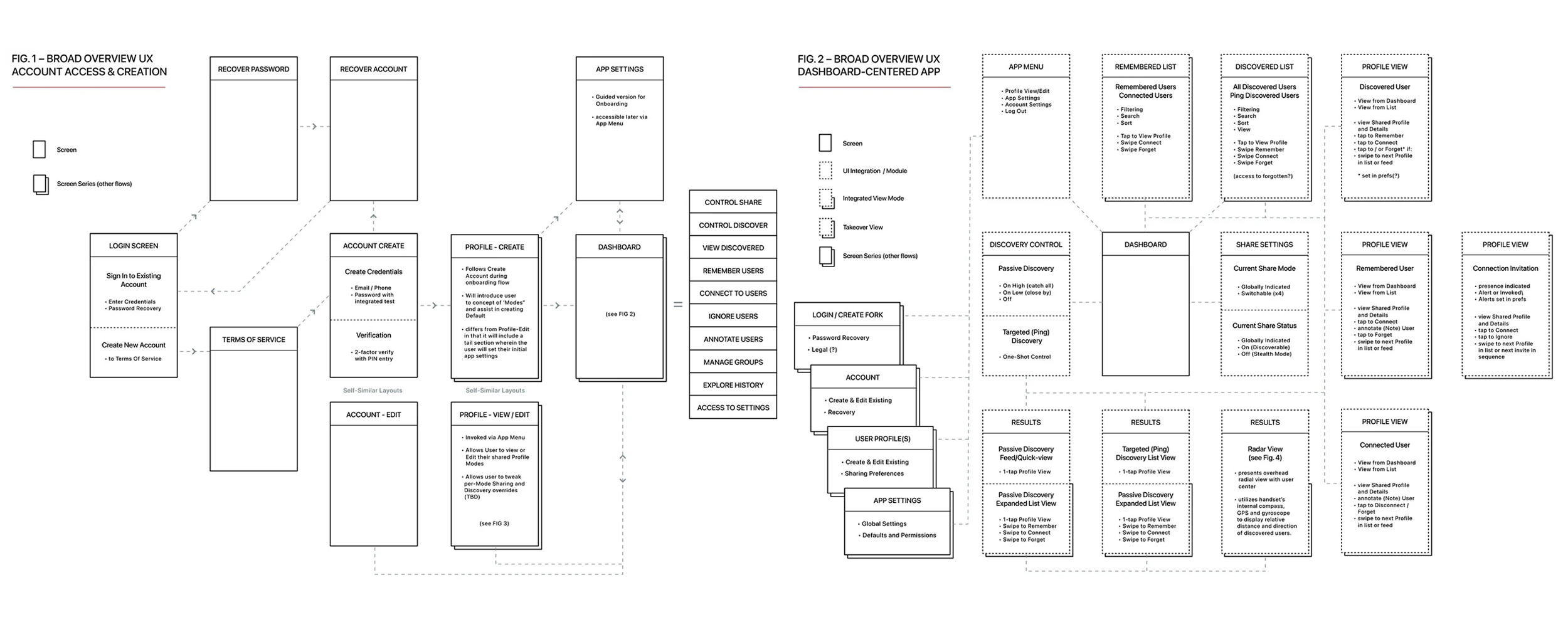
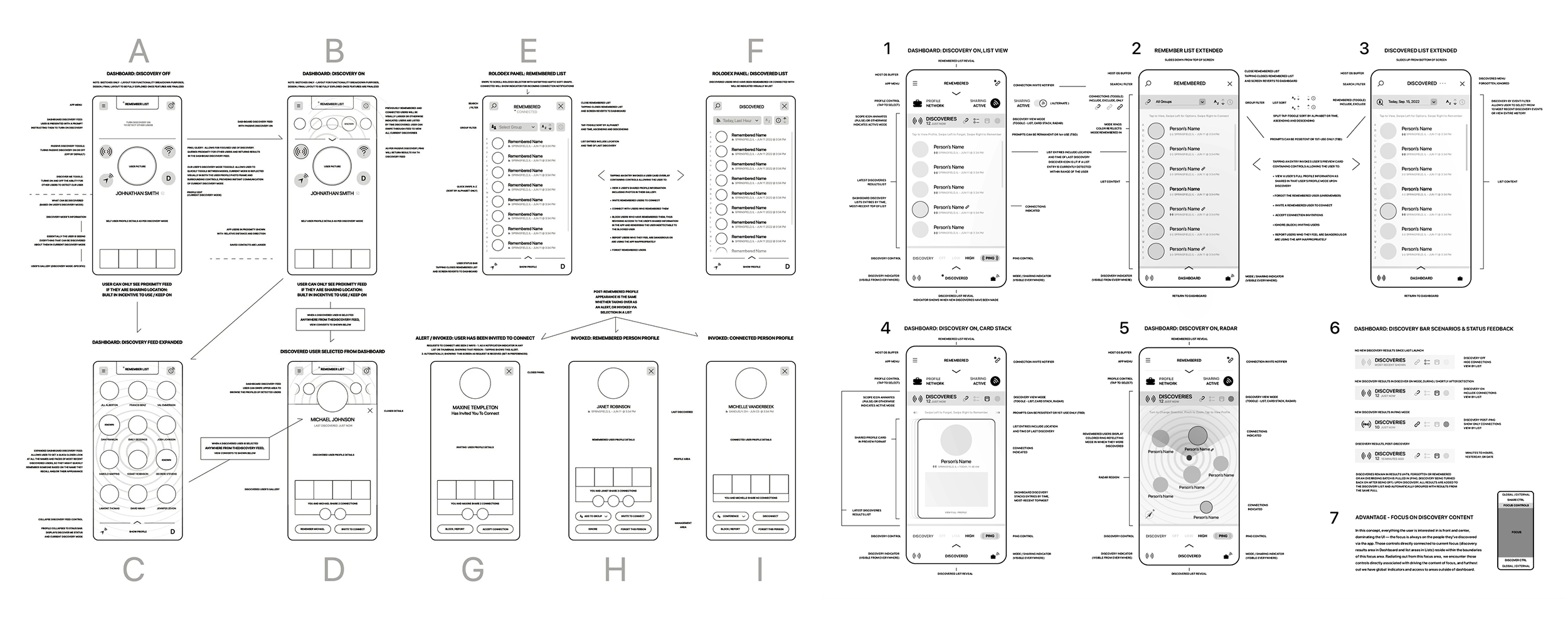
Startup product design, concept flow mapped to a finished interface

25+ years in business

60+ Microsoft projects

250+ projects delivered

Perfect 5.0 Clutch rating

Where to Start

Starting a digital product is a lot.

You have an idea. Maybe you've raised, maybe you're funding it yourself. Either way you're staring at something big and trying to figure out where the first cut goes. There's an old saying: how do you eat an elephant? With a fork and a knife. One piece at a time.

That's what we do. We've guided products from a rough idea to a finished, shipped experience for 25 years, and we know which piece comes first, what can wait, and where founders usually get stuck.

Here's the part that matters most: we design for your user, not ours. We've built Disney's online music store for tweens and young adults, and a mobile app for buying and selling Hermes Birkin bags. Two audiences with nothing in common. Both had to feel like they were made for the person using them.

Our work gets a reaction. Then people use it and it just makes sense. That combination is harder than it sounds, and it's what we bring every time. One of our clients said it best:

The Skins Factory know the audience they're designing for. They know what works & what doesn't work. — Andre Bazire, Group Product Manager, Microsoft

Where You Are Right Now

What does your product need?

Founders come to us at every stage. Find the one that sounds like you.

I have an idea and nothing built yet.

We define the product with you, map how people move through it, and design the interface your developers build from. You leave with clear product direction, complete user flows, and production-ready screens instead of a loose collection of ideas.

Best fit: Fractional Design Services

I have a prototype that works but doesn't look like a product.

We take a functional build and turn it into a polished product users trust and investors take seriously. The core functionality stays intact while the experience, visual system, and presentation become cohesive.

Best fit:

I'm raising and the product has to look the part.

We design the experience your deck promises, so the demo matches the pitch. Every important screen and interaction is shaped to communicate credibility, momentum, and a product worth backing.

Best fit: Fractional Design Services

My developers are building faster than I can design.

We work alongside your team on a fractional basis, keeping design ahead of the build instead of behind it. Your developers get clear flows, finished screens, and responsive design support without waiting for a full-time hire.

Best fit: Fractional Design Services

My product works but people get lost in it.

We find where users stall, drop off, or ask for help, then redesign those moments so the product explains itself. The result is a clearer experience that improves adoption, reduces friction, and takes pressure off your support team.

Best fit:

I'm not sure what I need yet.

Tell us where you are and we'll help determine what the product actually needs first. You'll get an honest recommendation on the right scope and engagement, with no obligation to move forward.

Best fit: Fractional Design Services

Need an NDA before we talk? Happy to sign. We've signed hundreds of them. We only ask that it's a clean NDA, with no non-competes or added rules of engagement bolted on.

Selected Work

Products we started and finished.

Every project below started somewhere uncertain. A rough app that needed rethinking, a business model that had never been drawn, a single sentence from a founder who could picture it but not build it.

We are showing them here rather than sending you off to case studies, so you can see the work without leaving the page. What to look for: how the product was defined before it was designed, how users move through it, and what the finished thing looks like when someone has thought about every state instead of just the happy path.

Cryptocurrency Exchange Mobile App

HODLIT

A poorly designed exchange that needed tuning under the hood and a new paint job.

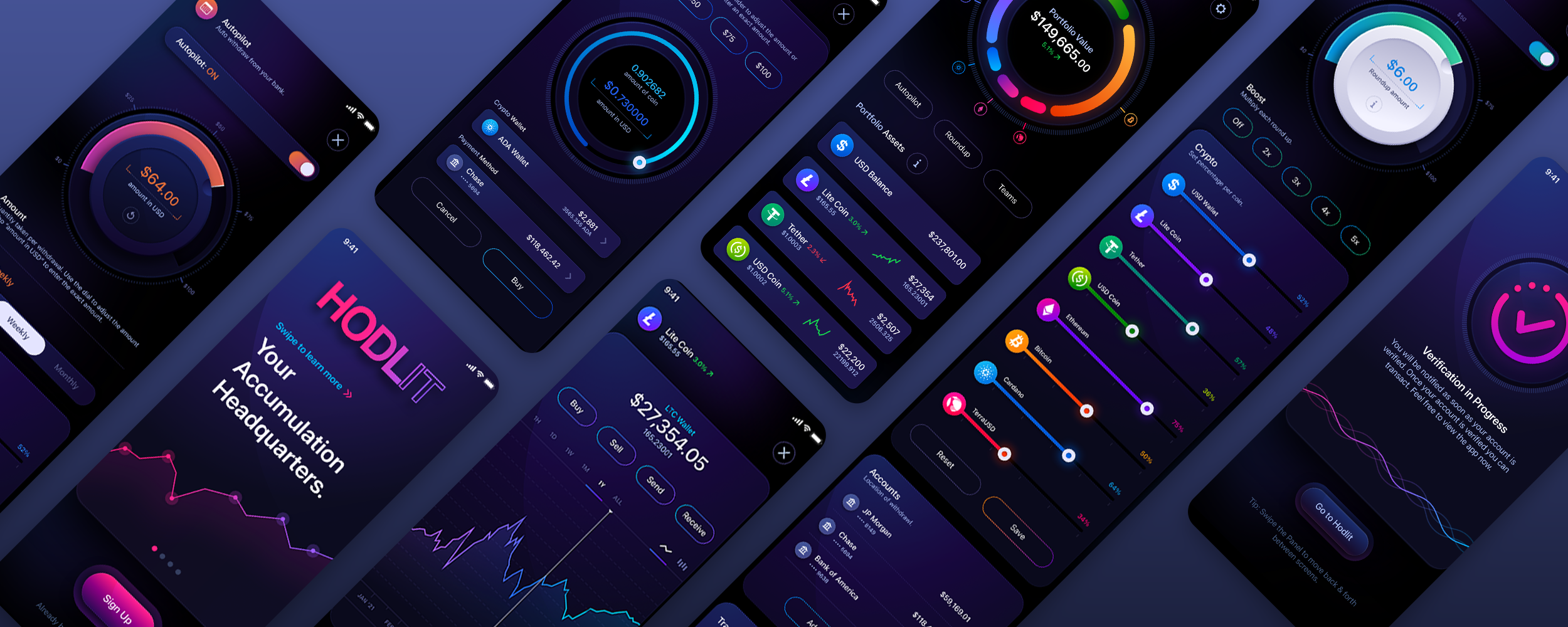
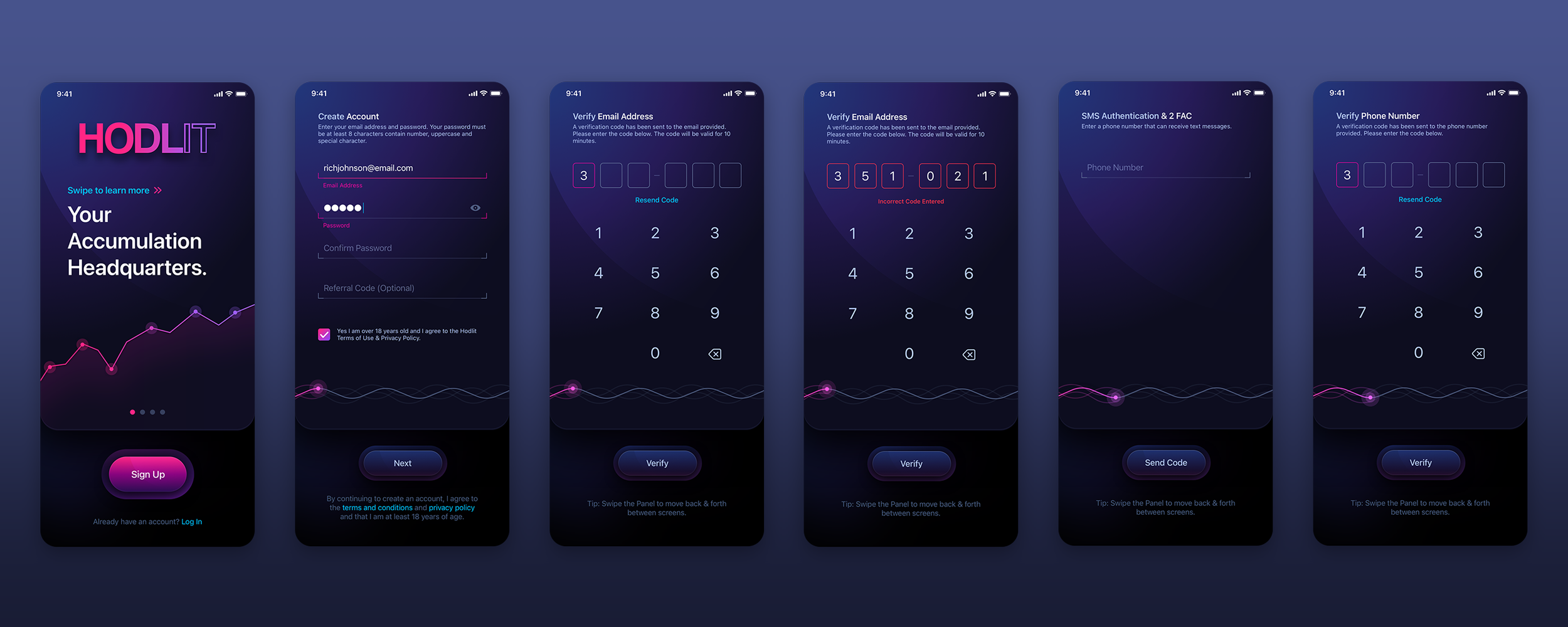
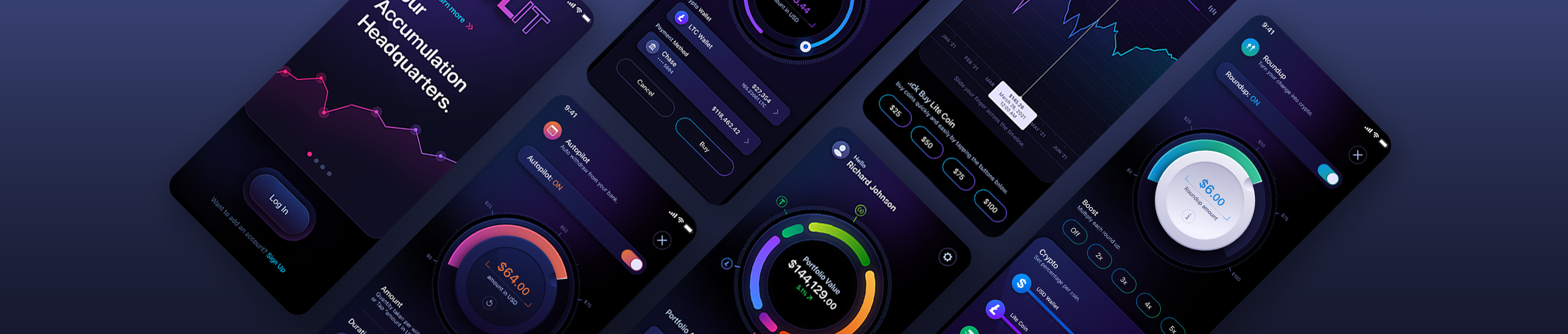
HODLIT's founder came to us with a working crypto exchange and an interface that did not match it. Over 21 weeks we rebuilt the app from onboarding through portfolio management, trading, automated investing, settings, and referrals.

Every one of those screens carries financial consequences, so the interface had to stay engaging without ever obscuring a value, an action, or what happens next. We built on a panther-black foundation with deep purple undertones, which lets the gradients, coin colors, and active states stand apart from everything around them.

Progress indicators, interactive segmented rings, swipeable asset rows, and tactile controls do the rest. They tell a user where they are, what they can touch, and how each action affects their account.

01 / 04

The Skins Factory's work exceeded my expectations. They were responsive, communicative, & easy to work with. — Drew Optebeke, Founder, HODLIT

RELATED READING The Iterative Process of User Interface Design
DevOps Platform

Iguana Solutions USA

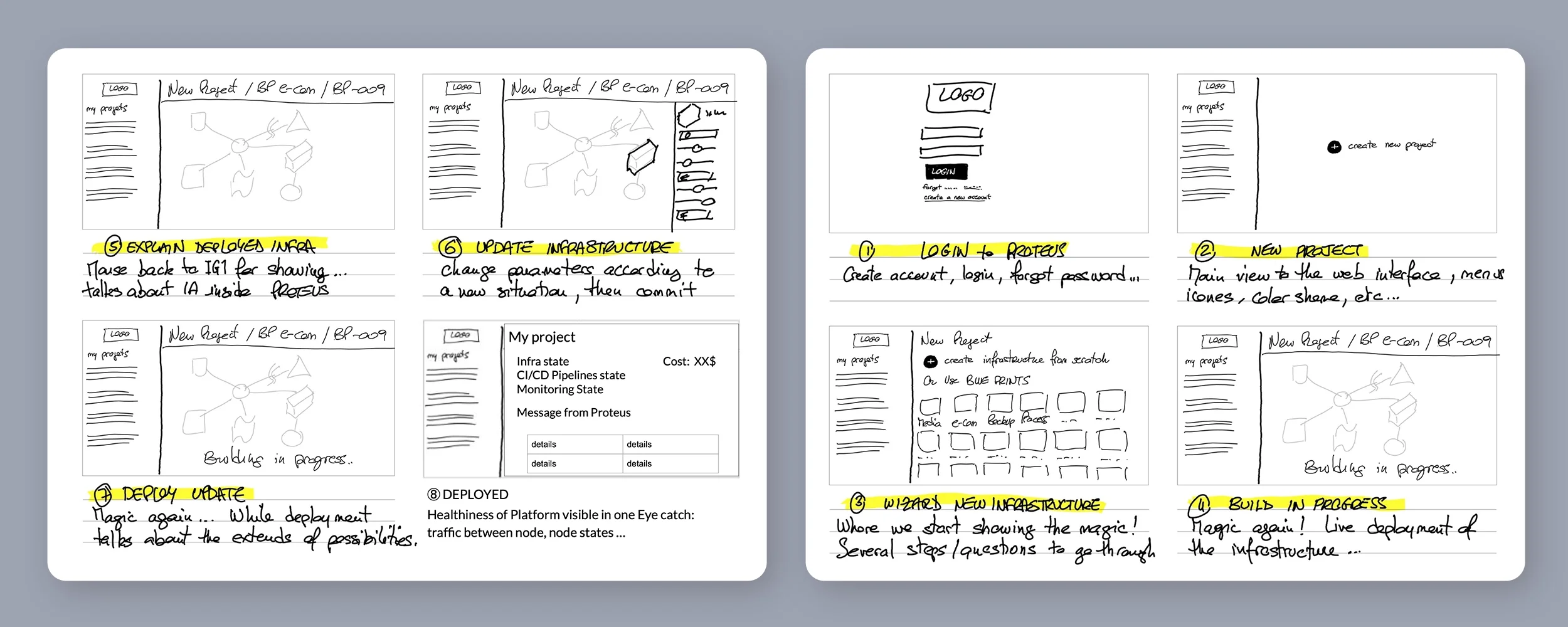
What we were handed was a stack of hand-drawn screens.

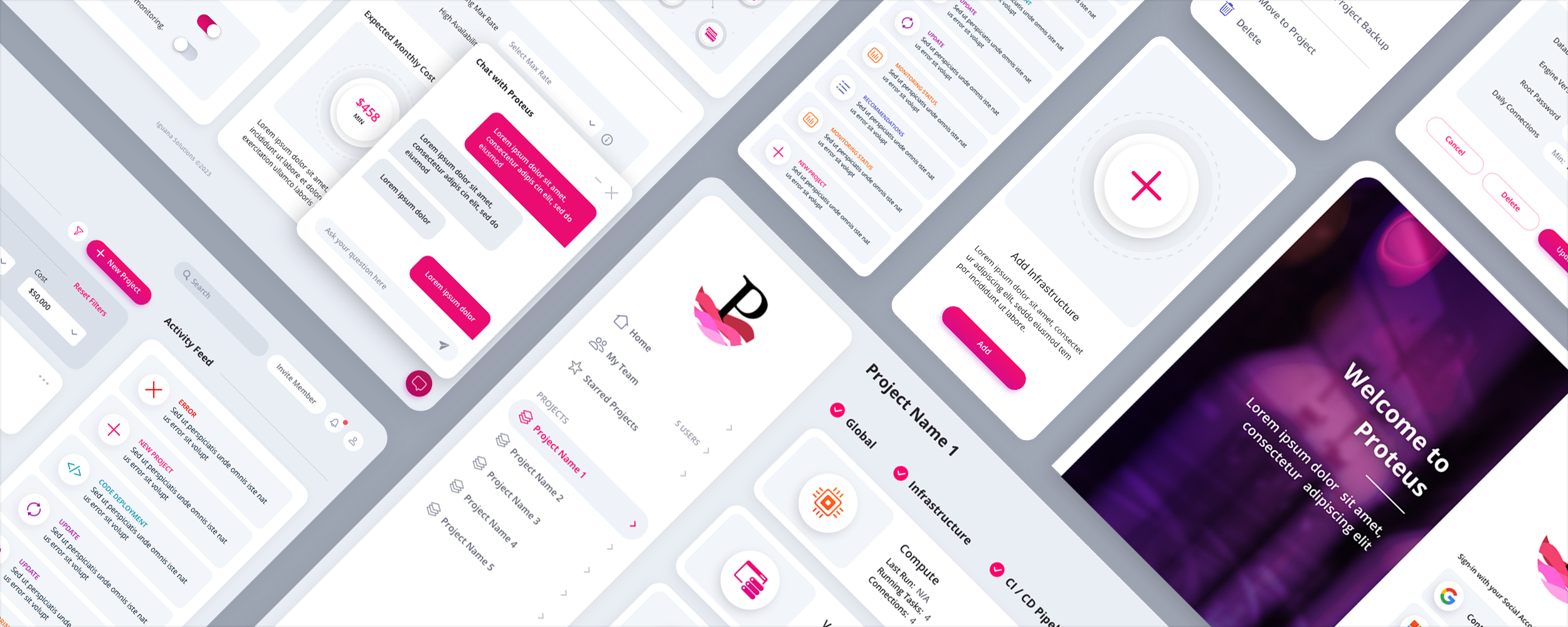
Iguana Solutions designs and manages critical infrastructure across physical, cloud, and hybrid platforms. There was no product yet. The scope of work arrived as low-fidelity sketches with notes in the margins, and one of them read "where we start showing the magic." That was enough to begin.

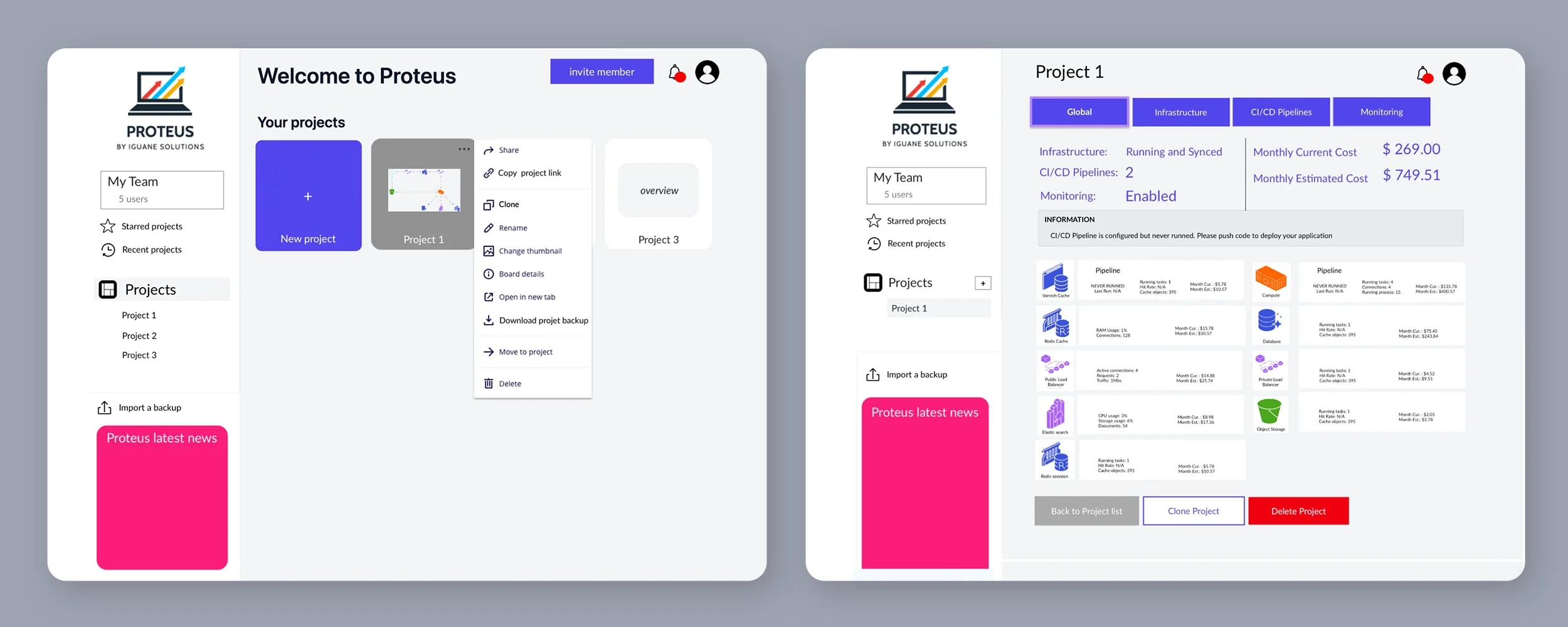
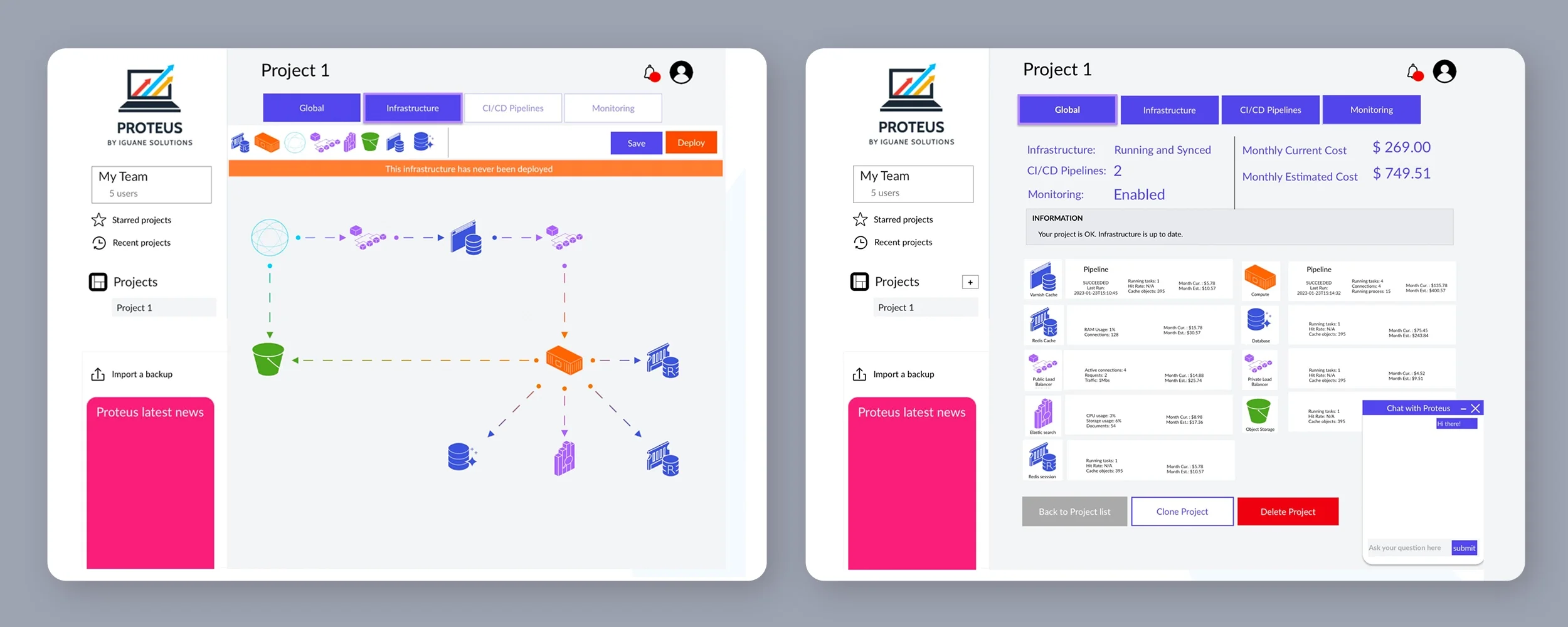
We designed the whole application from there: creating a project, choosing a blueprint, configuring infrastructure, deploying it, and monitoring it once it was live. Engineers had to move between project status, configuration, deployment progress, and monitoring data without drowning in it, so a collapsible sidebar hands screen space back to the Infrastructure Grid, zoom controls suit different working views, and guide marks light up beneath a component as it is dragged into place.

Deployment states are spelled out rather than implied. Progress bars, completion percentages, and plain onboarding copy leave no question about where the infrastructure is in the process. The complexity stays underneath the product, where it belongs.

01 / 04

Selecting a Design Agency Can Be Tough

Except we make it easy. Jump on a quick phone call or Google Meet with Jeff, our founder.
Tell him what you’re working on and get answers to any questions you have.

Start a Conversation
Healthtech iOS App

Patientory

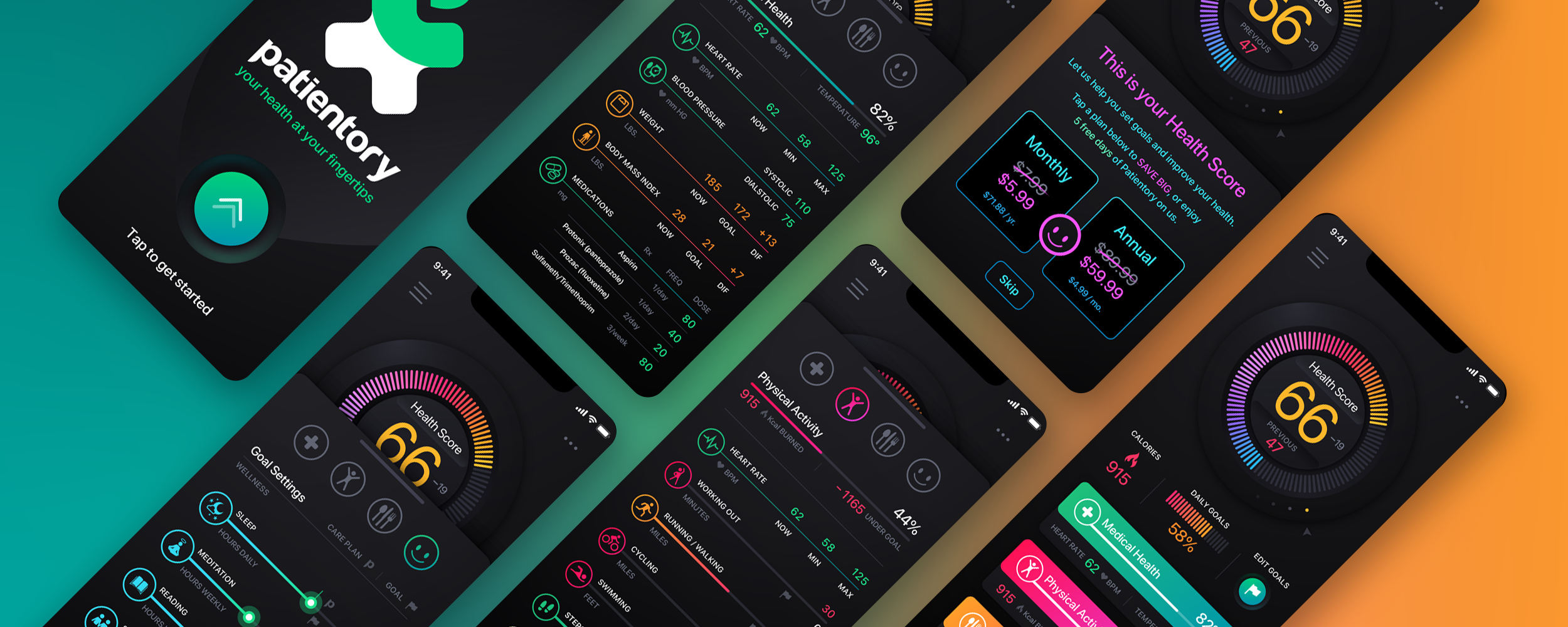
Twenty-five questions before anyone sees the product.

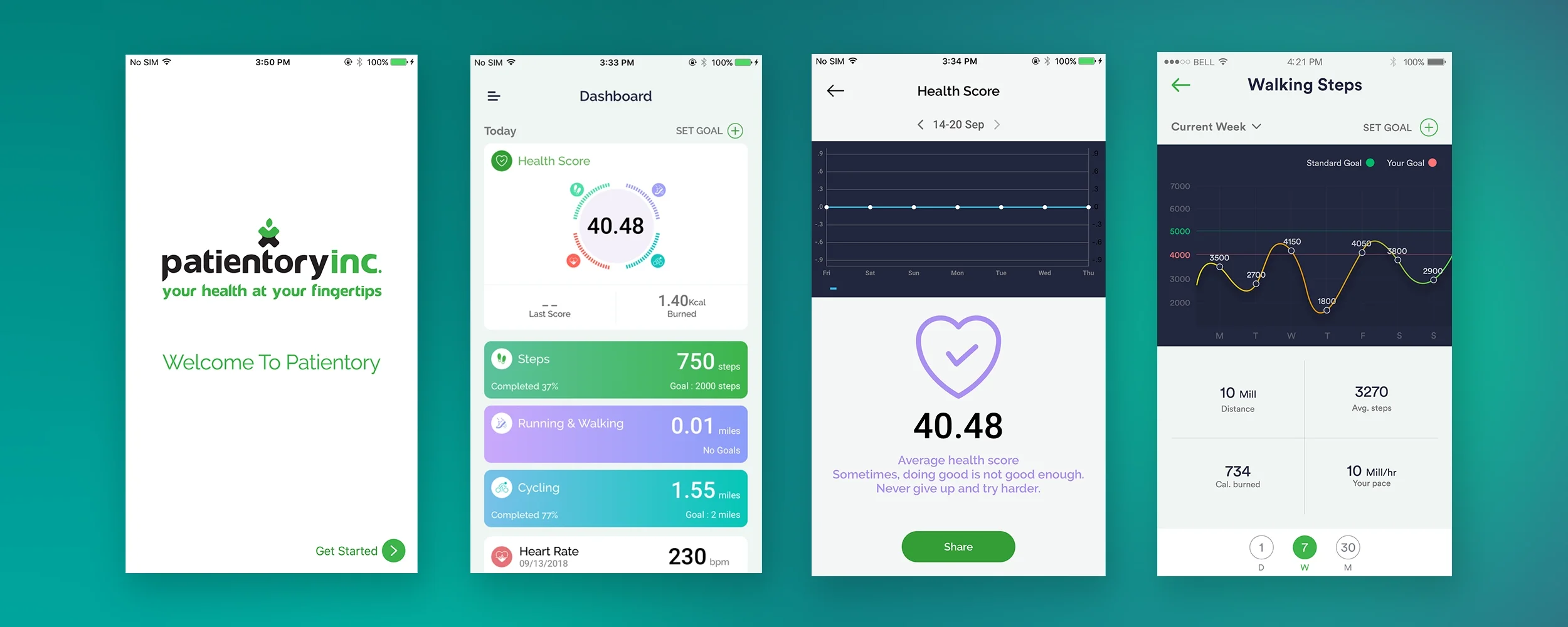
Patientory had a working iOS app. It functioned, and it looked like something built by engineers rather than designed. The founder knew it, and brought us in to design the product the idea deserved.

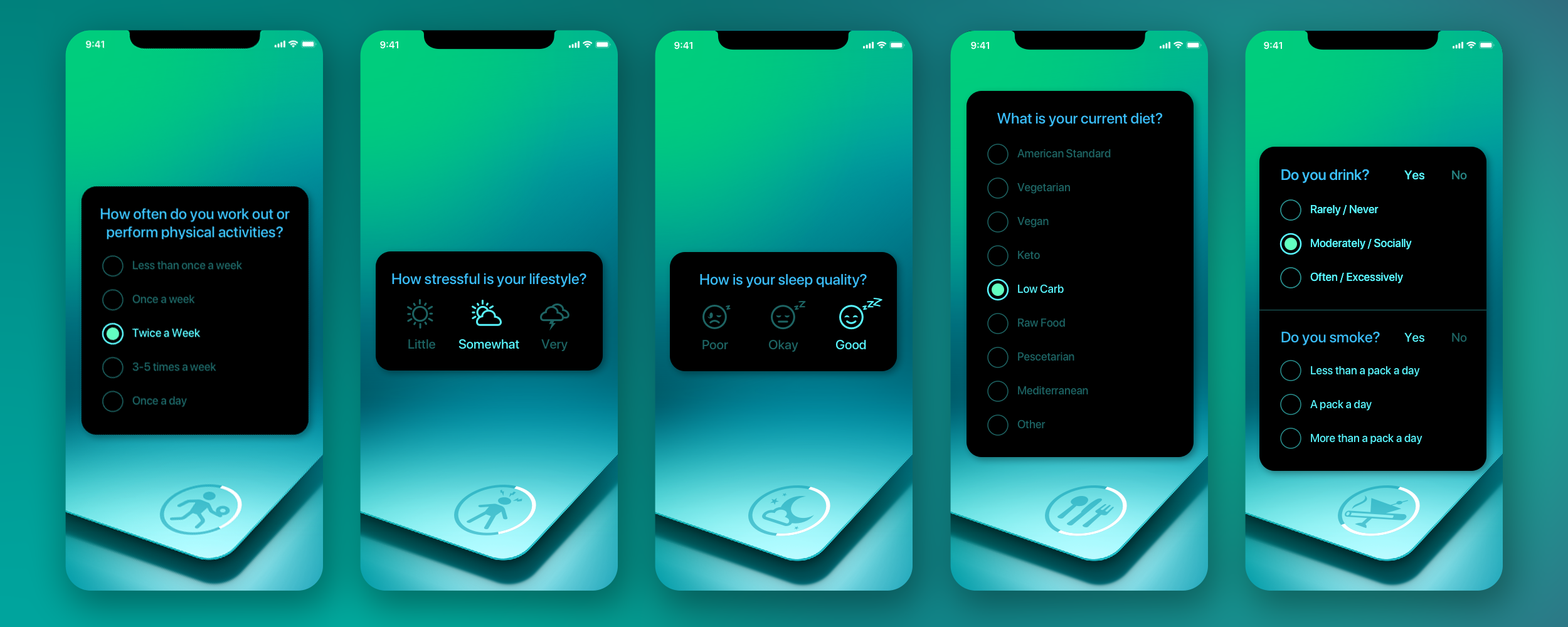
The hard part was onboarding. Patientory cannot produce a health score or a personalized plan without asking a series of questions, so users face twenty mandatory questions plus five optional ones, on top of account setup, a digital wallet, and security phrases, all before reaching the dashboard.

Since we couldn't remove the questions, we designed the UI to give a feeling of forward momentum. The color theme changes every five questions, cycling through gradients that borrow their palettes from sunrises, ocean water, and other calming color combinations, so the app looks different as you progress. The ring around each question's icon doubles as a progress bar. And we removed the Next button on every mandatory question, automatically advancing to the next panel once a question has been answered, which cuts both mental and finger fatigue.

Ninety-plus iOS screens across a saturated gradient system on deep black, because most healthcare apps are bland and this one had to be worth opening every day.

01 / 03

Social Discovery Mobile App

Recognize Me

This one started as a single sentence.

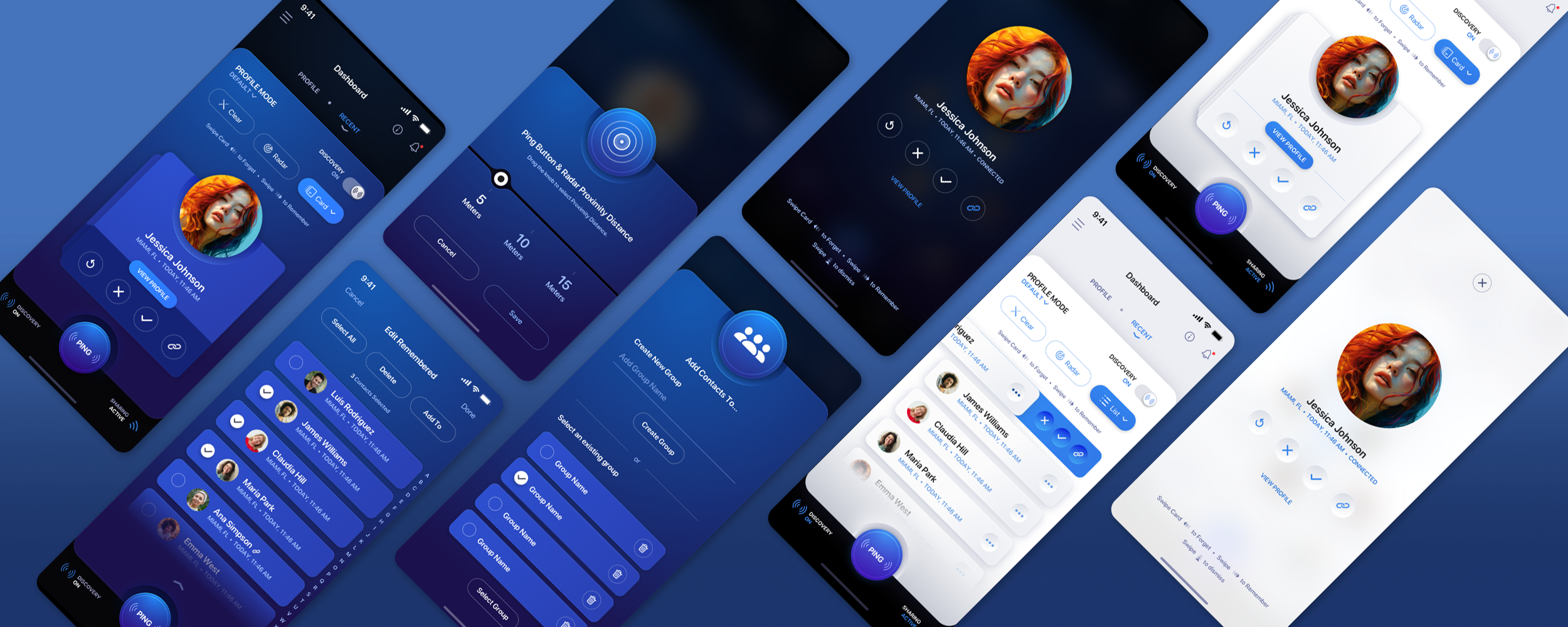
"I want to be able to put a name to a face," the client told us. That was the entire brief. No screens, no flows, no feature list, just an idea and a founder who wanted it built properly. Almost six months later it existed as a complete, buildable application design.

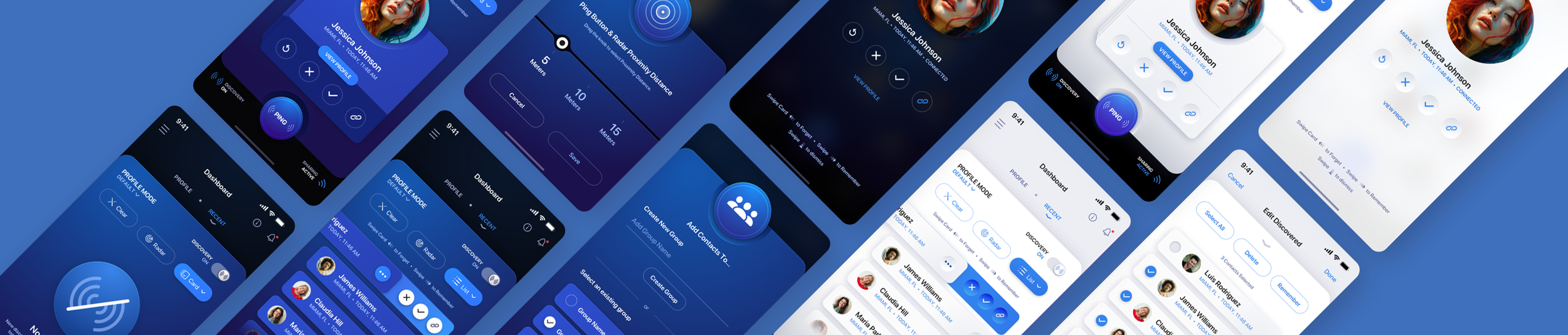
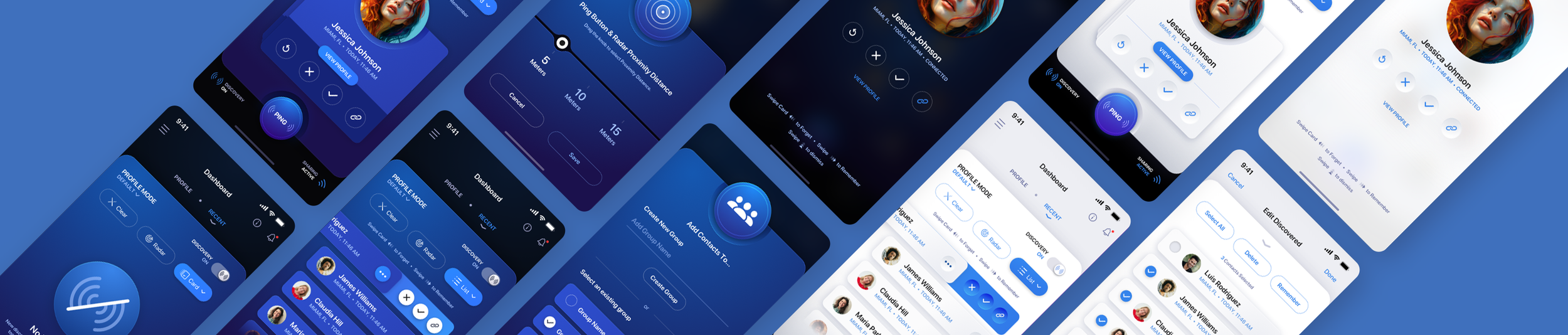
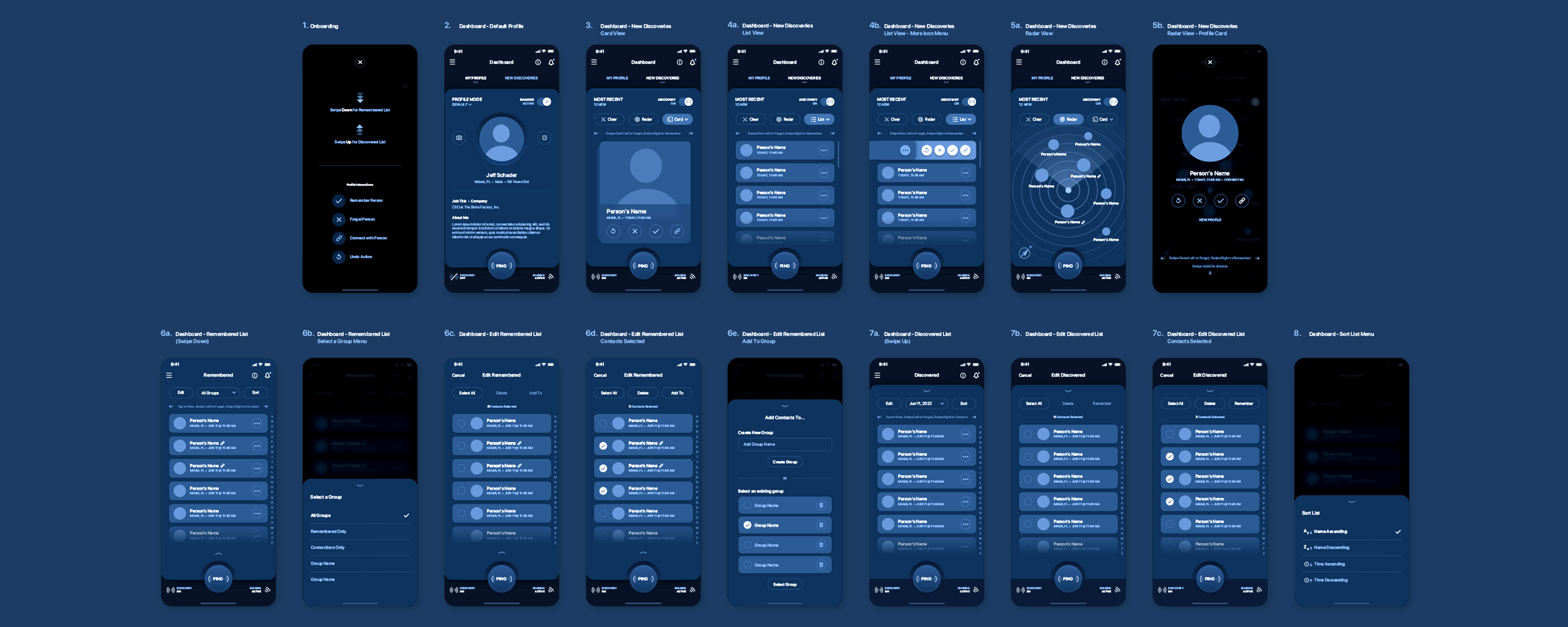
With a concept this open, you start at the beginning and work forward. We outlined the core feature set, mapped the user flows, worked through low-fidelity wireframes, and then designed the high-fidelity comps. Along the way we expanded the original idea to give people a reason to open the app more than once. Three profile connection modes, Social, Networking and Romance, let the same product work at a conference, a wedding or a night out, and discovery is limited to a short physical radius so you are only seeing the people actually in the room with you.

The finished design covers light and dark mode, two default color themes and five colorways, over 600 screens in total. The development team received a blueprint rather than a mood board.

01 / 04

RELATED READING Designing a Social Mobile App

From Idea to MVP

MVP UI/UX Design for Startups
Build What Matters First

An MVP is not a stripped-down version of everything you eventually want your product to become. It is the smallest version that still solves the core problem, gives real users something meaningful to use, and gives your startup something worth learning from.

We help founders decide what belongs in that first release, what can wait, and how the experience should work before development starts.

You only get one shot at a first impression. That is why an MVP still needs to feel intentional, coherent, and ready for real users.

That can begin with little more than an idea, a feature list, rough sketches, or a product already taking shape. We define the essential user flows, organize the information architecture, work through onboarding and core workflows, and design the interfaces your development team actually needs to build the MVP.

The goal is not simply to launch with fewer features. It is to launch with the right features, connected by a coherent user experience that feels intentional from the first screen to the last. That means fewer unnecessary features, fewer expensive detours during development, and less money spent building things your users may never need.

When the MVP UI/UX design is complete, you have more than a collection of attractive screens. You have a focused product experience, production-ready interface designs, defined interactions, and a visual blueprint your developers can build from without filling in the gaps themselves.

Prototype Before Development

Rapid Prototyping for Startups
See It Before You Build It

Going directly from an idea into development is one of the fastest ways to make an expensive mistake. Once engineers start building, every change takes more time, touches more code, and costs more money. Rapid prototyping gives you a chance to work through the product experience before those decisions become expensive to undo.

We turn early product ideas into interactive prototypes you can actually click through, evaluate, share, and improve before development begins.

We can start with a rough concept, sketches, a feature list, existing wireframes, or an early product that needs direction. We map the important user flows, design the interfaces around them, and connect those screens into a realistic prototype that shows how the product should behave from one interaction to the next.

That gives founders something far more useful than static screens. You can walk through onboarding, test important workflows, put the experience in front of potential users, show it to stakeholders, and find the places where the product stops making sense while changing them is still fast and inexpensive.

Rapid prototyping also creates a common language between founders, designers, and developers. Instead of trying to explain an experience in a document or a meeting, everyone can see how it is supposed to work. Once the direction is right, the prototype becomes the foundation for the final UI and a much clearer blueprint for development.

Startup-Affordable Engagements

You Don’t Need
a Fortune 500 Budget to Work With Us

Every project above started somewhere unglamorous. An idea in the form of a single sentence from a client. A stack of hand-drawn screens, thankfully not on cocktail napkins. Someone with a real idea and no product yet. Ask us about the scope done in crayon. Yep.

We’re a small studio which does big things. Always have.

We could tell you our work has sat on over 2 billion PCs worldwide when it shipped with Windows Vista and Windows 7, alongside the driver application we designed for Intel. We could tell you one client has kept coming back for over 17 years across 4 companies, or that the guy who hired us in 2013 to redesign his screen recording software came back over a decade later to have us redesign it again. Talk about an ROI. But none of that tells you what it is actually like to work with us.

Here is what that looks like. You can work with us two ways: a fixed-cost project when the scope is clear, or a fractional engagement when you need design leadership alongside you week to week without a full-time hire. And every time you call, the CEO answers the phone. That’s how we operate and have for over a quarter of a century.

When we’re done, you walk away with a complete design. Your development team, or ours if you need one, builds from it without guessing. That gap, between a design that looks finished and a design that is actually buildable, is where most of a founder’s money gets burned. We close it before a line of code gets written.

Tell us what you are building. Thirty minutes, no pitch.

Book a 30-minute intro call directly with Jeff, our founder, via Calendly. Pick a time, get a calendar invite instantly. No account managers, no sales reps. Weekday and limited weekend slots available.

Book a Call With Jeff, Our Founder

Verified on Clutch

The Skins Factory Reviews 5.0
12 Reviews
5.0

“The design they delivered was incredibly well done; it was visually awesome.”

VP Product & Analytics, Healthcare Platform

Verified Review
5.0

“The Skins Factory’s work exceeded my expectations. They were responsive, communicative, & easy to work with.”

Founder, Cryptocurrency App

Verified Review
5.0

“The Skins Factory valued our goals, and that was apparent in the quality of work they delivered.”

VP of Risk Management, Supply Chain & Trade Finance Company

Verified Review
5.0

“The range of UI/UX work they have done and the companies they have designed things for, very impressive.”

Software Development Manager, Healthcare Service Provider

Verified Review
5.0

“They know how color, texture, and design aesthetics work together to visually grab the viewer’s attention.”

Chief Design Officer, BioMojo LLC

Verified Review
5.0

“They don’t just do what we tell them. Instead, they suggest ways to make things better.”

Co-Founder, GameIn Esports Platform

Verified Review

Common Questions

Startup UI/UX Design FAQ

Straight answers to the questions founders and startup teams usually ask us before we start designing.

Can you help if I only have an idea and nothing designed yet?

Yes. Some of our startup projects begin with little more than an idea, a rough feature list, sketches, or a founder explaining what the product needs to accomplish. We help define the product, determine what belongs in the first version, map the user flows, work through the important interactions, and turn that early thinking into a complete interface your development team can actually build.

Do you design MVPs for startups?

Yes. We help startups define and design the minimum viable product before development begins. That includes identifying the core feature set, mapping user flows, designing the essential screens and interactions, and creating a production-ready UI your developers can build from. The goal is not simply to make the product smaller. It is to make the first version focused, coherent, and useful enough to solve the core problem without spending time and budget on features that can wait.

Do you offer rapid prototyping for startup products?

Yes. Rapid prototyping lets you explore how a product should work before committing significant time and money to development. We can turn an early concept, rough sketches, or an existing product idea into user flows, interface designs, and interactive prototypes that let you experience the product, evaluate important workflows, and refine the direction before engineering begins.

Can you redesign or improve a prototype that already works?

Absolutely. A working prototype gives us something useful to evaluate. We can preserve the underlying functionality while rethinking the user experience, visual system, hierarchy, navigation, workflows, and interactions so the product feels intentional rather than assembled. This is especially useful when the engineering is working but the product does not yet look or feel ready for customers, partners, or a serious demo.

Should my startup use a fixed-cost project or fractional UI/UX design?

It depends on how clearly the work can be defined. A fixed-cost project works best when the scope and deliverables are clear enough for us to see the finish line. Fractional design is better when the product is still taking shape, priorities are changing, or you need ongoing design leadership alongside your team. Many startups use both: fractional time to define the product and a fixed-cost project once the remaining design scope is clear.

Can you work directly with our existing development team?

Yes. We regularly work alongside internal developers and outside engineering teams. Our job is to keep the product experience defined clearly enough that development is not forced to invent design decisions as they build. That means clear user flows, finished interface designs, defined states and interactions, and direct communication when questions come up during implementation.

What does our development team receive when the design is finished?

Your developers receive production-ready interface designs that show how the product should look, behave, and respond across the workflows we have designed. Depending on the project, that can include user flows, responsive layouts, component states, interaction direction, prototypes, and a design system or reusable UI library. The goal is simple: your developers should be building from a blueprint, not guessing what happens between the screens.

Can you redesign a startup product that users are struggling to understand?

Yes. If users are getting lost, abandoning important workflows, asking the same support questions, or failing to discover features you know are valuable, we can examine where the experience is breaking down and redesign those moments. Sometimes that means a focused workflow redesign. Other times the navigation, information architecture, onboarding, or overall interface needs broader attention.

Do you sign NDAs before discussing a startup idea?

Yes. If you need an NDA in place before discussing the product, we are happy to sign one. We have signed hundreds over the years. We only ask that it is a straightforward confidentiality agreement without non-compete provisions or unrelated rules of engagement added to it.

Is The Skins Factory affordable for an early-stage startup?

We built our startup engagements specifically so you do not need a Fortune 500 budget to work with an experienced design studio. When the scope is clear, we can structure the work as a fixed-cost project. When it is not, fractional design lets you buy focused studio time without hiring a full-time senior designer or building an internal design department before you need one. We will tell you which approach makes the most financial sense for where your product is right now.

Startup cryptocurrency mobile app UI/UX design by The Skins Factory

From Idea to MVP

How to Build an MVP for Your Startup From App Idea to Launch

 
The Really, Really Short Form

Have a product in mind? Let’s talk.

Contact Us: +1 954.821.2966 hello@theskinsfactory.com

When Are You Looking to Start? *
What Does Your Project Need? *

Your information is never shared with a third party.

Thank you for reaching out.

We will be in touch within one business day.