

Cybersecurity UI/UX Design Agency
for Risk Management Platforms
Protecting the Attack Surface, One User Interface at a Time.
For over two decades, The Skins Factory has designed interfaces where precision is non-negotiable. We bring that same standard to cybersecurity, SOC dashboards, threat platforms, incident response tools, and enterprise security suites. Our work makes dense, high-stakes data immediately actionable, reducing cognitive load for analysts, building confidence for operators, and presenting a hardened, trusted face to every user who depends on the system. Here is a look at a few projects:

Cybersecurity UI/UX Design Services
Cybersecurity products are built to protect. The best ones make complexity actionable.
We design UI/UX for cybersecurity platforms, SOC dashboards, risk management systems, compliance workflows, security analytics, and complex enterprise security products. We turn alerts, threat data, risk scores, and technical workflows into clear interfaces that help users understand what changed, prioritize what matters, and respond faster. Whether you need to design a cybersecurity product from scratch, modernize a legacy interface, or improve an existing platform, we reduce cognitive load, improve decision-making, and make complex security software easier to use.
The Cybersecurity UI/UX Problems We Fix
Cybersecurity products often grow around new threats, integrations, data sources, compliance requirements, and technical capabilities. Over time, the interface becomes harder to scan, slower to navigate, and more difficult to trust. We redesign those experiences so security teams can identify what changed, understand why it matters, and take the right action faster.
Critical Alerts Buried in Noise
When every alert appears urgent, genuine threats become harder to identify. We create clearer prioritization, hierarchy, and escalation patterns so users can focus on what matters most.
Risk Scores Without Enough Context
Users see a score or severity level without understanding what caused it, what changed, how it affects the organization, or what action should happen next.
Fragmented Investigation Workflows
Analysts lose time moving between alerts, assets, evidence, users, cases, and remediation tasks just to understand and resolve a single issue.
Dashboards That Display Data Instead of Decisions
The interface reports what happened but does not help users understand what requires attention, why it matters, or what they should do next.
The Same Interface for Every User Role
Analysts, engineers, administrators, and CISOs are forced through views that were not designed around their responsibilities, priorities, or level of technical detail.
Inconsistent Severity and Status Patterns
Risk, urgency, exposure, remediation status, and confidence are communicated differently across modules, making the product harder to interpret and trust.
Complex Configuration and Onboarding
New users struggle with integrations, policies, permissions, data sources, and setup requirements before they can reach meaningful value from the platform.
Security Products That Have Outgrown Their Design System
New modules introduce inconsistent navigation, tables, filters, components, terminology, and interaction behavior across the platform.
Workflows That Increase Cognitive Load
Dense screens, unclear states, excessive controls, and competing visual signals make it harder for users to evaluate risk and respond confidently.
AI Features Without Transparency or Control
AI recommendations appear without evidence, confidence, source attribution, or a clear way for users to review, modify, approve, or reverse an action.
Selected Work
Featured Cybersecurity UI/UX Design Projects
In cybersecurity software, every interaction has to help users understand risk, prioritize threats, and take action without adding more cognitive load. SOC dashboards, risk management platforms, compliance tools, attack surface monitoring systems, and enterprise security products often contain dense data, complex workflows, and competing levels of urgency. Our approach focuses on making that information easier to scan, interpret, and act on when speed and clarity matter most.
Below are selected cybersecurity projects that show how The Skins Factory brings clarity, usability, visual hierarchy, and product thinking to complex security platforms. For a broader look at our work across cybersecurity, SaaS, fintech, healthcare, enterprise software, and more, explore our Main UI/UX Design Portfolio .
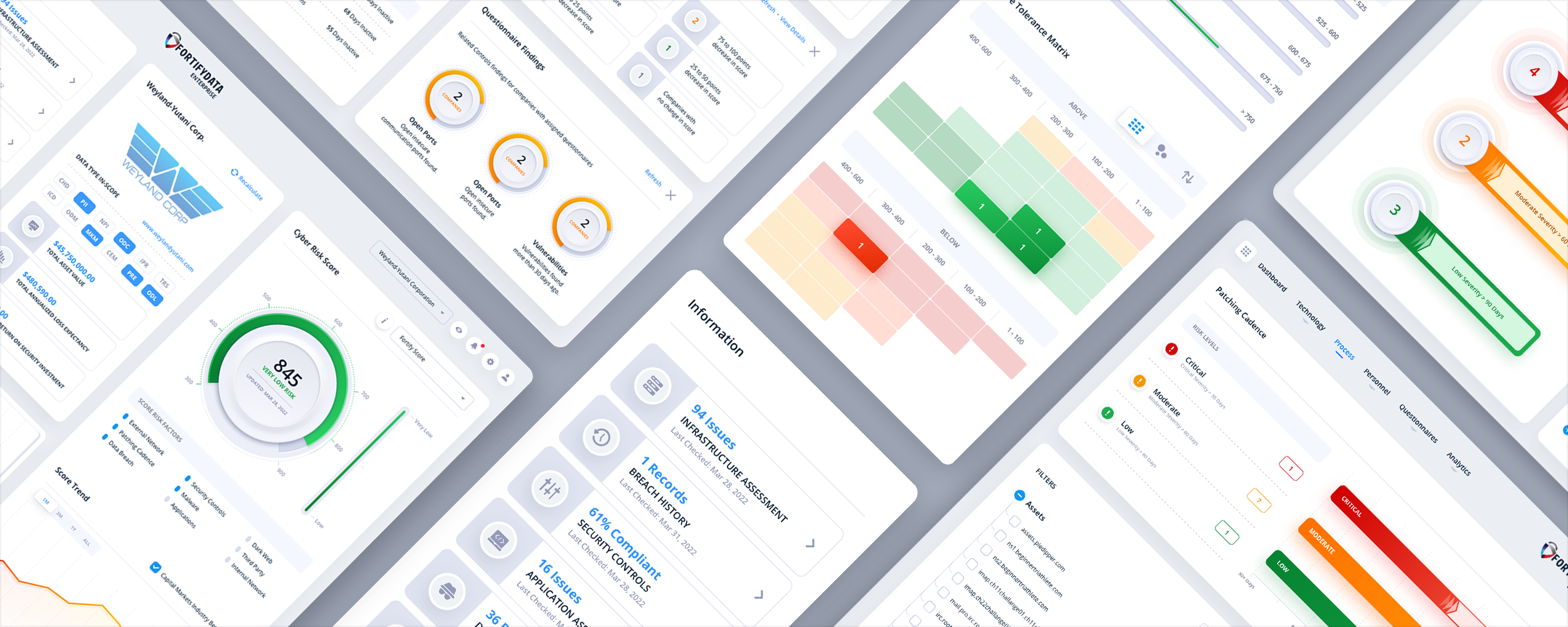
FortifyData
Cybersecurity SaaS Platform UI/UX Design. Web App.
The Skins Factory and FortifyData: A Winning Collaboration in Cybersecurity Risk Management UI/UX Design
FortifyData, a world-leading Cybersecurity Risk Management platform that enables their clients to identify and manage risk exposure across the entire attack surface, brought The Skins Factory in to redesign their core platform's UI/UX design. Our team refined the existing UI and UX over 40 screens, while modernizing the visual design, weaving neumorphic elements into the analytics' visual design, and turning complex security requirements into intuitive, human-centered experiences.
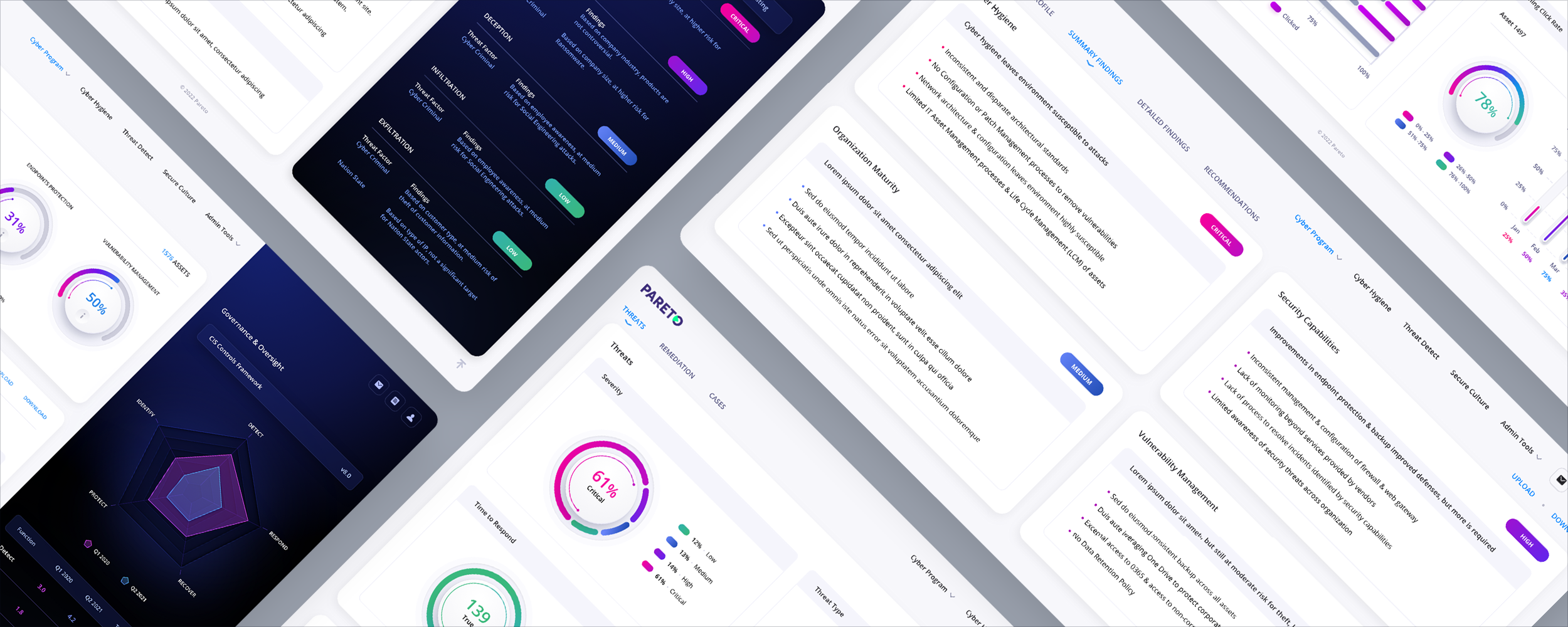
Pareto Cyber
Cybersecurity SaaS. Web App UI/UX Design.
Redefining Cybersecurity UI/UX for the Enterprise: Inside The Skins Factory's Pareto Cyber Web App Design
Pareto Cyber, a leader in cyber prevention & defense, contracted The Skins Factory to redesign their secure, scalable, forward-thinking cybersecurity program for mid-market and enterprise. In an effort to forge new ground, our design team broke the paradigm of red, yellow & green and designed an alternative color scheme to denote critical, high, medium and low risks.
ERP Maestro
Enterprise Security SaaS. Web App UI/UX Design.
Redesigning Enterprise Security SaaS: How The Skins Factory Reimagined ERP Maestro's Web App UI/UX
ERP Maestro, a leader in SAP security solutions, brought The Skins Factory in to redesign a focused set of screens within its enterprise security platform. We went beyond the original scope by creating multiple visual themes for the analytics dashboard, giving users a choice in how they viewed complex security data while keeping the experience clear, consistent, and easy to navigate.

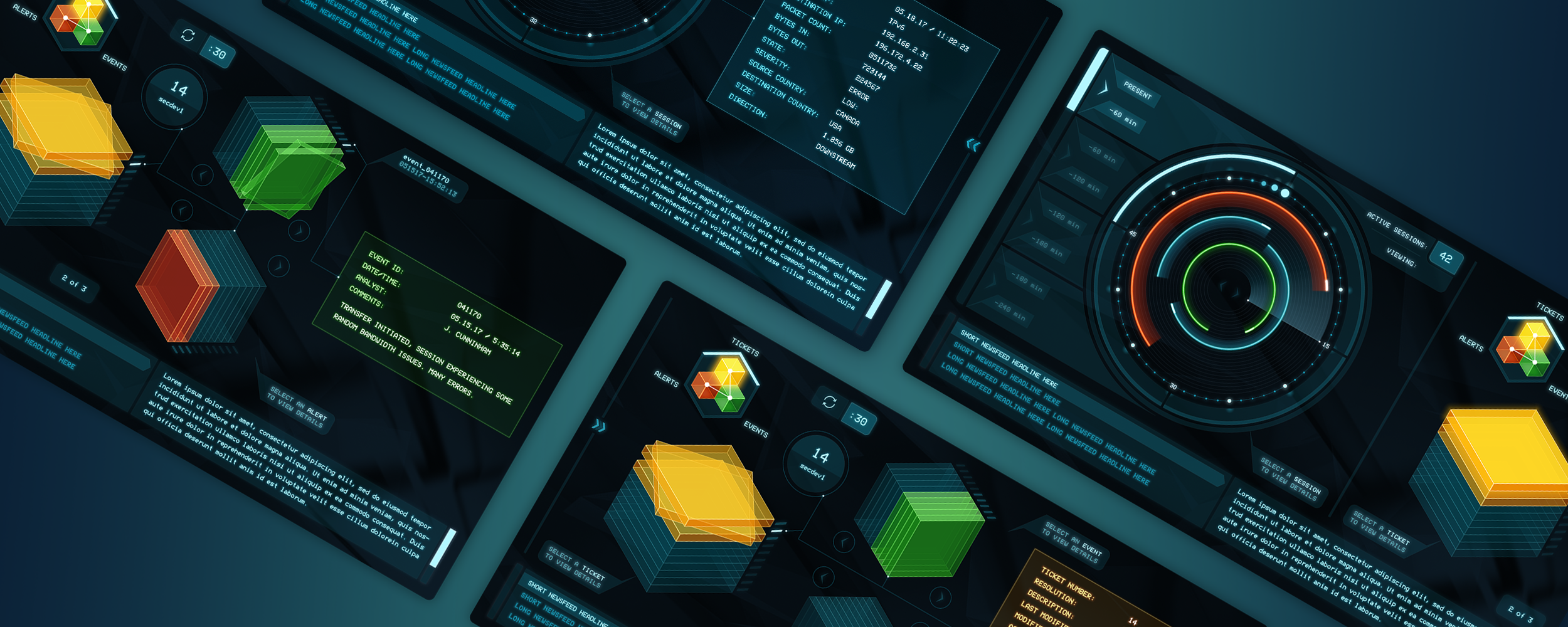
Masergy
Cybersecurity. Animated Desktop App UI/UX Design.
Designing an Animated Cybersecurity UI for the Enterprise: How The Skins Factory Brought Masergy's Desktop App to Life
Masergy, a Comcast Business company, delivers global networking, SD-WAN, managed security, unified communications, and enterprise technology services. The Skins Factory designed an animated user interface for its managed security desktop application, creating a more dynamic visual experience for monitoring and interacting with complex cybersecurity information.
Two Ways to Work With Us
Some cybersecurity products need a complete design engagement. Others need senior UI/UX expertise integrated into an active product roadmap. We offer both, so the engagement can match the scope, pace, and stage of your cybersecurity platform.
Full Engagement
Complete Cybersecurity Product Engagement
Best for new cybersecurity products, major platform redesigns, legacy modernization, complex security workflows, threat visualization, and complete design-system initiatives. We guide the product from discovery and early concepts through high-fidelity UI/UX design, interactive prototypes, reusable components, and developer-ready source files.
Ongoing Support
Fractional Cybersecurity Design Support
Best for ongoing feature design, dashboard refinement, alert prioritization, risk visualization, workflow improvements, UX debt, design-system maintenance, and product teams that need experienced design support without another full-time hire. Priorities can shift as the roadmap evolves, giving your team senior design capacity where it is needed most.
Cybersecurity Products We Design and Redesign
Cybersecurity software takes many forms, but the UI/UX challenge is often the same: helping users interpret complex information, understand what deserves attention, and take action with confidence. We design new security products and modernize existing platforms across a wide range of cybersecurity categories.
SOC and SIEM Platforms
Analyst workspaces, alert queues, investigation views, event correlation, escalation flows, and operational dashboards designed for faster threat detection and response.
Cybersecurity Risk Management
Risk scoring, exposure monitoring, asset prioritization, remediation planning, and reporting experiences that make complex security posture easier to understand.
Attack Surface Management
Interfaces that help users identify exposed assets, understand vulnerabilities, track changes, and prioritize risks across an expanding attack surface.
Vulnerability Management
Vulnerability discovery, severity assessment, asset context, ownership, remediation tracking, and reporting workflows organized around action instead of raw data.
Threat Intelligence Platforms
Threat feeds, indicators, actor profiles, relationships, timelines, evidence, and contextual intelligence presented through clear investigative workflows.
Incident Response and Case Management
Case creation, evidence review, task ownership, collaboration, escalation, response playbooks, and resolution tracking designed around coordinated action.
GRC, Compliance, and Audit Software
Controls, assessments, policy management, evidence collection, audit preparation, compliance mapping, and reporting workflows made easier to manage.
Identity and Access Management
User access, permissions, authentication, role management, approvals, policy configuration, and identity governance experiences designed for clarity and control.
Cloud, Endpoint, and Network Security
Monitoring, configuration, policy management, asset health, detection, and response workflows across cloud environments, devices, endpoints, and networks.
Executive and CISO Dashboards
Security posture, exposure, trends, risk movement, compliance status, and business impact translated into clear executive-level reporting and decision support.
SOC Dashboard UI/UX Design
Security Dashboards Should Drive Decisions,
Not Just Display Data
A cybersecurity dashboard should help users identify what changed, understand why it matters, and act without digging through layers of disconnected information. We design SOC and security dashboards around prioritization, investigation, ownership, and response, giving analysts and security teams a clearer path from alert to resolution.
Alert Prioritization and Correlation
We organize alerts by severity, confidence, business impact, asset context, and related activity so analysts can separate genuine threats from background noise.
Threat and Vulnerability Drill-Downs
Users can move from a high-level security signal into the affected asset, vulnerability, evidence, history, and associated risk without losing context.
Evidence and Context Beside the Alert
Supporting evidence, affected systems, user activity, timelines, and related events appear where analysts need them instead of being scattered across separate screens.
Ownership, Escalation, and Case Status
Clear ownership, assignments, escalation paths, status changes, and collaboration tools help teams understand who is responsible and what happens next.
Remediation Actions and Response Playbooks
Recommended actions, response steps, approvals, and remediation workflows are placed directly beside the security issue they are meant to resolve.
False-Positive Management
Analysts can dismiss, suppress, tune, document, and revisit false positives without losing the reasoning or historical context behind those decisions.
MTTD and MTTR Visibility
Detection and response metrics are connected to the workflows creating them, helping teams understand where delays occur and where processes can improve.
Analyst Workspaces and Saved Views
Role-specific filters, saved searches, custom views, and personalized workspaces help analysts return to the information and tasks they use most often.
Practitioner Perspectives
The Methodology Behind the Work
We don't believe in black-box design. Our cybersecurity UI/UX work is built on 25 years of designing complex, trust-critical software for cybersecurity, fintech, healthcare, SaaS, and enterprise teams. Our articles aren't marketing content; they examine the practical design decisions, workflow challenges, and interface patterns we address in active product engagements. We share them ungated because we believe the best way to demonstrate authority is to show exactly how we solve the hard problems.

Featured Article · 15 min read
Cybersecurity UI/UX Design: Why Security UI Fails When Users Don't Trust It
There is a category of software where the interface itself is part of the threat model. Where a cluttered dashboard is not just a usability problem, it is a risk. Where a missed alert is not a minor annoyance, it is a breach. That category is cybersecurity.
Security products are built by security people, which is both their greatest strength and their most consistent design liability. Deep domain expertise does not automatically produce usable interfaces, and the gap between what a platform can do and what an analyst can act on in real time is often enormous. Closing that gap is a design problem, and it is the one we solve.
From the Article
How should color be used in a security dashboard?
Color in security UI is signal architecture, not decoration. The red, yellow, green convention is fine until it is applied without discipline: a dashboard where a third of the items are red is noise, because when everything is urgent nothing is. Every color should be justified by the action it is meant to trigger. There is also an accessibility dimension the industry rarely addresses. Red-green colorblindness affects roughly one in twelve men, so a status system built only on red and green is a point of failure for a real share of any large analyst team.
Should a security platform show the same interface to analysts, engineers, and CISOs?
No. A SOC analyst triaging alerts under time pressure, a security engineer configuring the platform, and a CISO who needs posture and trend at a glance are three different users with three different jobs. Most platforms give all of them a version of the same screen, so the analyst drowns in the engineer's depth and the CISO cannot find the summary. The right answer is role-aware design: one platform with clearly differentiated views, each calibrated to its user, increasingly assembled in real time by an AI layer rather than toggled by static user type.
What does bad cybersecurity UI actually cost a business?
The cost is operational and financial, not cosmetic. Poor design drives alert fatigue, so real threats sit uninvestigated in an overwhelming queue. It raises mean time to respond, because an analyst forced to cross three screens to reach the context behind an alert is slower in a scenario where minutes matter. And it compounds the stress that fuels analyst burnout and turnover, in a field with a documented, severe talent shortage. In a growing, competitive market, hard-to-use products also lose customers to easier ones, which makes usability a retention issue, not just a UX one.
Role-Based Cybersecurity UX
One Security Platform. Very Different Users.
Analysts, engineers, administrators, and executives may work from the same cybersecurity platform, but they do not need the same dashboard, level of detail, or set of controls. We design role-based experiences that surface the right information and actions for each user without forcing everyone through the same interface.
SOC Analysts
Fast alert triage, supporting evidence, investigation context, ownership, escalation, saved views, and direct response actions.
Security Engineers
Integrations, detection rules, automation, policy configuration, tuning, system health, and the technical depth needed to manage and improve the platform.
Administrators
User management, roles, permissions, access policies, account settings, audit history, and platform governance presented with clarity and control.
CISOs & Executives
Security posture, exposure trends, business risk, compliance status, remediation progress, and executive reporting without analyst-level noise.
Cybersecurity Product Design
Cybersecurity UI/UX Design Services
We help cybersecurity companies design new products, modernize existing platforms, simplify complex workflows, and build scalable interface systems. Engagements can begin with a focused audit, one critical workflow, or a complete product redesign.
Cybersecurity Product UX Audits
We evaluate navigation, dashboards, workflows, hierarchy, usability problems, and design inconsistencies before recommending what should change first.
Data Visualization and Risk Communication
We translate threat data, exposure, severity, confidence, trends, and business impact into visual systems users can interpret quickly.
New Product and MVP Design
We turn early product requirements, security capabilities, and technical workflows into clear user flows, prototypes, and production-ready interfaces.
Role-Based Interface Design
We design differentiated dashboards, navigation, actions, permissions, and reporting for analysts, engineers, administrators, and executives.
Existing Platform Redesigns
We modernize legacy cybersecurity products without discarding the workflows, terminology, or functionality existing users already depend on.
Custom Design Systems and UI Kits
We create reusable components, interaction patterns, data states, and documentation through our Custom Design System Services .
SOC and Security Dashboard Design
We design alert queues, investigation views, posture dashboards, risk reporting, escalation workflows, and analyst workspaces around faster decisions.
User Research and Usability Testing
We validate assumptions with stakeholders and users, identify friction in real workflows, and refine the interface around evidence rather than opinion.
Workflow Architecture and Prototyping
We map complex tasks, remove unnecessary steps, organize system states, and create interactive prototypes before engineering begins.
Fractional Design Support and Handoff
We support internal product teams on an ongoing basis and provide organized, developer-ready source files, specifications, and interaction documentation.
From Startups to Fortune 100/500 Companies
and All Points in Between.
This is a brief list of the clients that have relied on our commitment to excellence for over 25 years. What it doesn't show is how often they've come back after we exceeded their expectations… 60+ projects for Microsoft, 13+ for The Walt Disney Company, 8 for Warner Bros. Entertainment, 7 for Alienware… you get the idea. Repeat business powered solely by word-of-mouth, our ability to set trends, and the strength of our deliverables. While we have worked for some of the world's largest brands, our client list is filled with amazing mid-size companies and extraordinary startups.









Cybersecurity UI/UX Design Services Reviews
We think we're awesome, but don't take our word for it, see what our clients are saying.
"The journey and ultimately the results of their work provided us what we were looking to achieve."
"Reaction from clients has been tremendous; many existing customers want to upgrade."
"We are extremely happy with the new look and functionality. Skins did a great job."
"We spoke with a dozen companies before selecting The Skins Factory. We had a great experience."
"The Skins Factory's design work was a breath of fresh air. We found it outstanding."
"The new design is a vast improvement and far superior to that of competitors."
Clutch Reviews
"The design they delivered was incredibly well done; it was visually awesome."
"They were accessible, and their work was good."
"The Skins Factory valued our goals, and that was apparent in the quality of work they delivered."
"The range of UI/UX work they have done and the companies they have designed things for - very impressive."
"They know how color, texture, and design aesthetics work together to visually grab the viewer's attention."
"The design they delivered was incredibly well done; it was visually awesome."
Common Questions
Cybersecurity & Risk Management UI/UX FAQ
Straight answers about cybersecurity dashboards, alert fatigue, product redesigns, design systems, project scope, timelines, pricing, collaboration, and developer handoff.
How do you design security dashboards that reduce alert fatigue?
In cybersecurity, a cluttered dashboard is not just a usability problem. It is a security risk because a missed alert can lead to a breach. We reduce cognitive load by organizing threat data into clear visual hierarchies, simplifying complex workflows, and making critical alerts, severity levels, risk indicators, ownership, and next actions immediately visible. The most dangerous thing on the screen should be the most obvious thing on the screen.
How do you make dense, high-stakes security data actionable?
We prioritize clarity and actionability over raw data density. The first step is determining what the user needs to understand immediately, what should appear on demand, and what belongs one level deeper. We then design layouts that communicate severity, context, confidence, ownership, evidence, and recommended actions without forcing users to search across disconnected screens.
Can you redesign an existing cybersecurity platform?
Yes. Legacy modernization is one of our core capabilities. We can improve an established cybersecurity product without discarding the workflows, terminology, functionality, or user expectations that already work. Our FortifyData engagement involved refining the UI and UX across more than 40 screens, modernizing the visual design, improving the analytics, and making complex security requirements easier to understand and act on.
Have you designed real cybersecurity and risk management products?
Yes. Our cybersecurity work includes FortifyData, Pareto Cyber, ERP Maestro, and Masergy. These projects have involved cybersecurity risk management, attack-surface visibility, enterprise SAP security, risk prioritization, security analytics, managed-security interfaces, and complex enterprise workflows. The work ranges from focused interface engagements to redesigning more than 40 screens within an established cybersecurity platform.
Why does UX matter so much for cybersecurity tools?
Security analysts and administrators work across complex tools, large amounts of data, and constantly changing conditions. In a live incident, a confusing screen costs time the team does not have. Good cybersecurity UX reduces cognitive load, sharpens decision-making, builds operator confidence, improves response speed, and makes it easier to understand what changed, why it matters, and what should happen next.
How much does a cybersecurity UI/UX design project cost?
The cost depends on whether we are designing a new product or redesigning an existing platform, the number of modules, user roles, workflows, data states, and the condition of the current interface and design system. A focused UX audit or critical workflow costs less than redesigning an entire cybersecurity platform. After reviewing the product, requirements, and priorities, we provide a clearly defined scope and project fee.
How long does a cybersecurity platform redesign take?
A focused dashboard, workflow, or product module may take several weeks. A larger cybersecurity platform involving multiple user roles, dashboards, workflows, states, and a custom design system may take several months. The timeline also depends on whether we are starting from scratch, improving an existing interface, or working within an established product and design system.
What is included in a cybersecurity UI/UX engagement?
Depending on the project, an engagement may include discovery, stakeholder interviews, user research, UX audits, workflow architecture, wireframes, visual interface design, interactive prototypes, usability testing, custom design systems, and organized developer-ready source files. We tailor the process around the condition of the existing product and the decisions that need to be made first.
Can you work with our existing product and engineering teams?
Yes. We regularly collaborate with product managers, cybersecurity subject-matter experts, executives, internal designers, and engineering teams. We can lead the entire UI/UX engagement or focus on a specific dashboard, workflow, product module, design system, or modernization initiative. Our final files are structured for engineering handoff with reusable components, interface states, and interaction guidance.
Can you create or extend a design system for a cybersecurity platform?
Yes. Cybersecurity products require more than a standard collection of buttons and form fields. We design reusable patterns for alerts, severity levels, risk scores, confidence indicators, evidence, permissions, tables, filters, charts, investigations, system states, and response actions. We can create a new design system or extend an existing one so future modules remain consistent as the platform grows.
Deeper Answers
Q&A: Go Deeper Into Cybersecurity UX
Explore practical answers to common cybersecurity UX questions, from complex dashboards and alert fatigue to product redesign, role-based experiences, and visual hierarchy. Each answer draws from the kinds of design challenges we encounter across cybersecurity platforms, risk-management software, security operations tools, and enterprise applications.



Have a Cybersecurity Project? Let's talk.
Thank you for reaching out.
We will be in touch within one business day.
See how UX design can reduce cybersecurity alert fatigue by improving prioritization, grouping related events, strengthening visual hierarchy and making critical risks easier to act on.