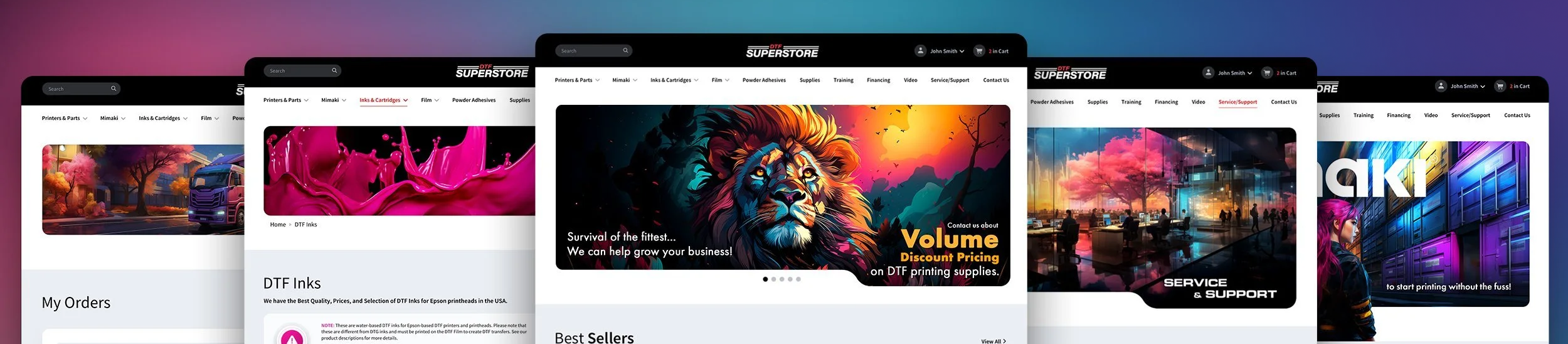
Web Design & Development Services When You Need Your Site to Perform
Most studios treat a website like a brochure. We treat it like a product. The same interface thinking we bring to enterprise software goes into the sites we build, from information architecture and page hierarchy through responsive web design, load performance, and search visibility. Marketing sites, ecommerce storefronts, and full web applications.
Get in touch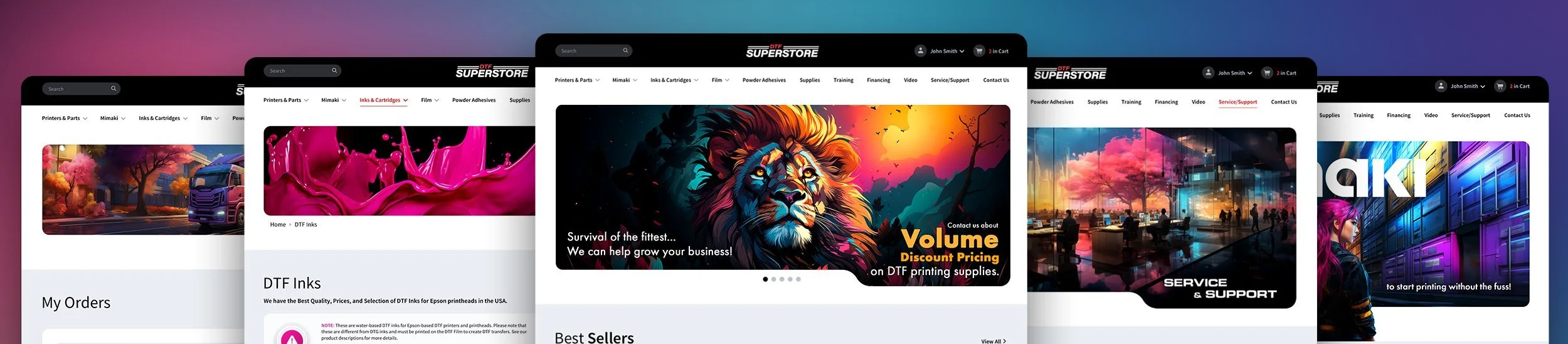
Web Design Services
Built For Brands That Need To Perform
Your website should do more than look polished. It should explain what you do, guide visitors toward action, support your sales process, and give your business a stronger digital foundation. The Skins Factory designs and develops custom websites that combine sharp visual design, clear messaging, intuitive user experiences, and development on whichever platform actually fits the project. Whether you are launching a new site, replacing one that no longer represents you, or building something closer to an application than a website, we create web experiences built to attract the right audience, communicate trust, and convert visitors into real opportunities.
Clients We’ve Designed For
The web work behind these names are real. We built the online music store for The Walt Disney Company, the launch site for Sony Pictures’ xXx, a proof-of-concept redesign of Xbox.com, and twelve themes that shipped with the MSN Spaces platform. We overhauled Infor.com and their Xtreme Support site.
Those projects came with brand systems, style guides, legal review, and stakeholders who had strong opinions. That experience shapes how we work with everyone, including the biomedical startup, the esports platform, and the printing supply retailer whose logos sit beside them. Same senior attention, same standard, whether the site is going in front of ten million people or ten qualified buyers.








- It takes 50 milliseconds for users to form an opinion of your website. — Source: Behaviour and Information Technology, Gitte Lindgaard
- 94% of a user's initial negative reactions (mistrust) are triggered by design elements, not the content. — Source: Sillence et al., Trust and Mistrust of Online Health Sites
- 75% of users judge a business's credibility based on its website's design. — Source: Stanford Web Credibility Project, Dr. B.J. Fogg
If you've seen our work, you've seen the level of commitment we place on each & every project we take on. The Skins Factory specializes in creating web designs that are not only visually stunning but also strategically crafted to make a lasting impact. Our innovative approach ensures that your website stands out.
User experience is at the forefront of our design philosophy. We meticulously analyze user behavior, preferences, and expectations to create web interfaces that are intuitive, easy to navigate, and provide a superior experience. Your website will not just look great but will also be user-friendly, encouraging engagement and conversion.
Our team boasts versatile skills, allowing us to cater to a diverse range of industries and project requirements. Whether you need an e-commerce platform, a corporate website, or a creative portfolio, we have the expertise to tailor our designs to suit your specific needs, ensuring maximum relevance and effectiveness.
We stay on the cutting edge of web design technologies. From responsive design for seamless user experiences across devices to incorporating the latest interactive elements, our designs are not only aesthetically pleasing but also technologically advanced. This ensures your website is not just visually appealing but also aligned with the latest industry standards.
We believe in transparent and collaborative partnerships. From the initial consultation to the final launch, we keep you involved and informed at every step. Your input is valued, and our collaborative approach ensures that the end result not only meets but exceeds your expectations.
Hiring us for your web design needs means choosing a team that is dedicated to delivering excellence, ensuring your website becomes a powerful tool for your business or brand.
Who We Build For
From Fortune 500 Platforms to First Websites
Company size is not what decides how we work. A printing supply retailer shipping product out of a warehouse, a biomedical firm building simulation systems for military and healthcare clients, and an esports platform serving millions of players all needed the same thing: a site that carried real weight with the people it was built for.
Larger organizations come to us because we have worked inside brand systems and style guides at that scale and know how to design within them without producing something generic. Smaller companies come to us because they get the same senior attention. There is no junior team here, and no account layer between you and the people doing the work.
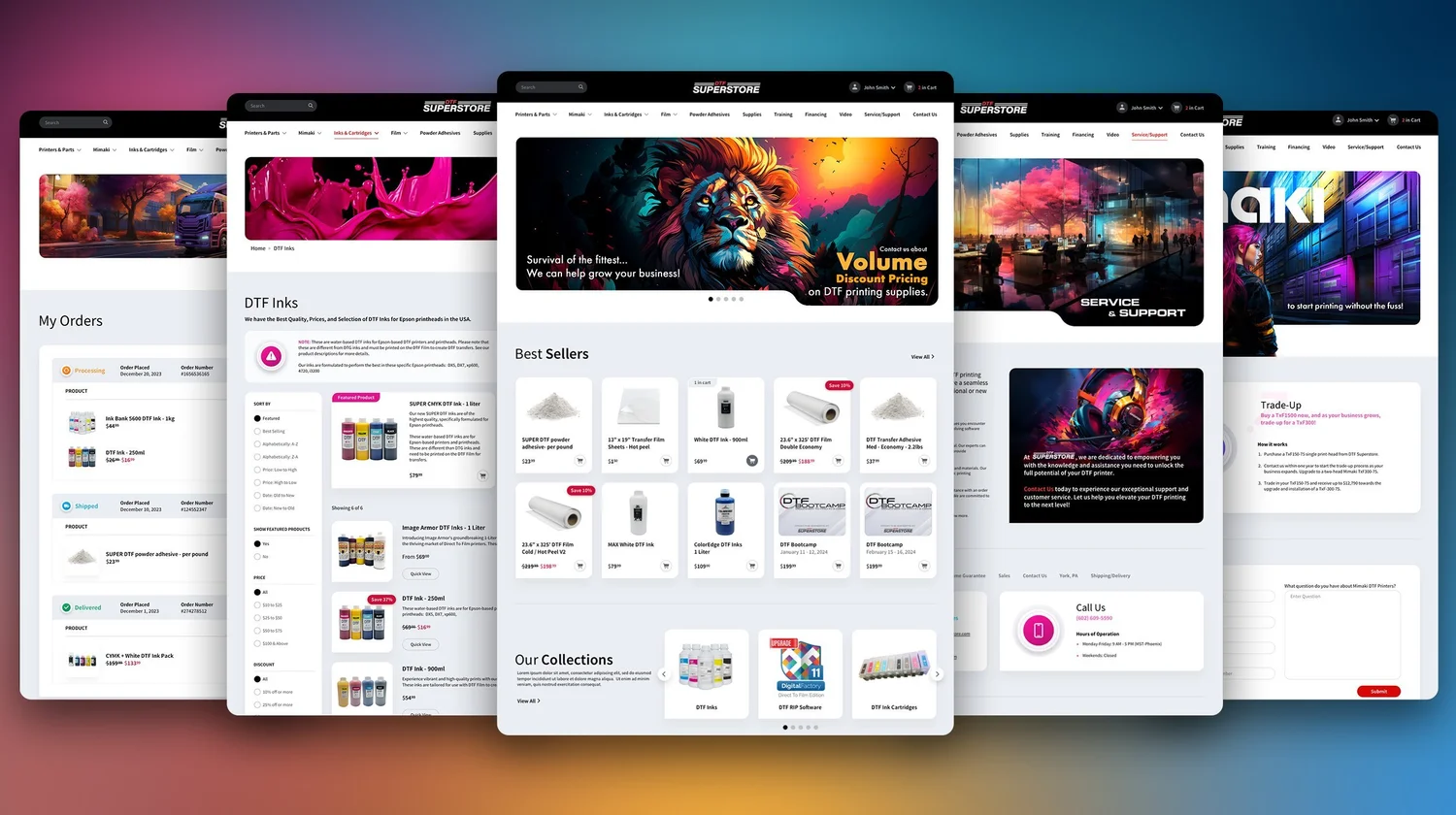
DTFsuperstore
Shopify storefront design for a printing supply retailer, built around vibrant CMYK in a category gone colorless.
View Project
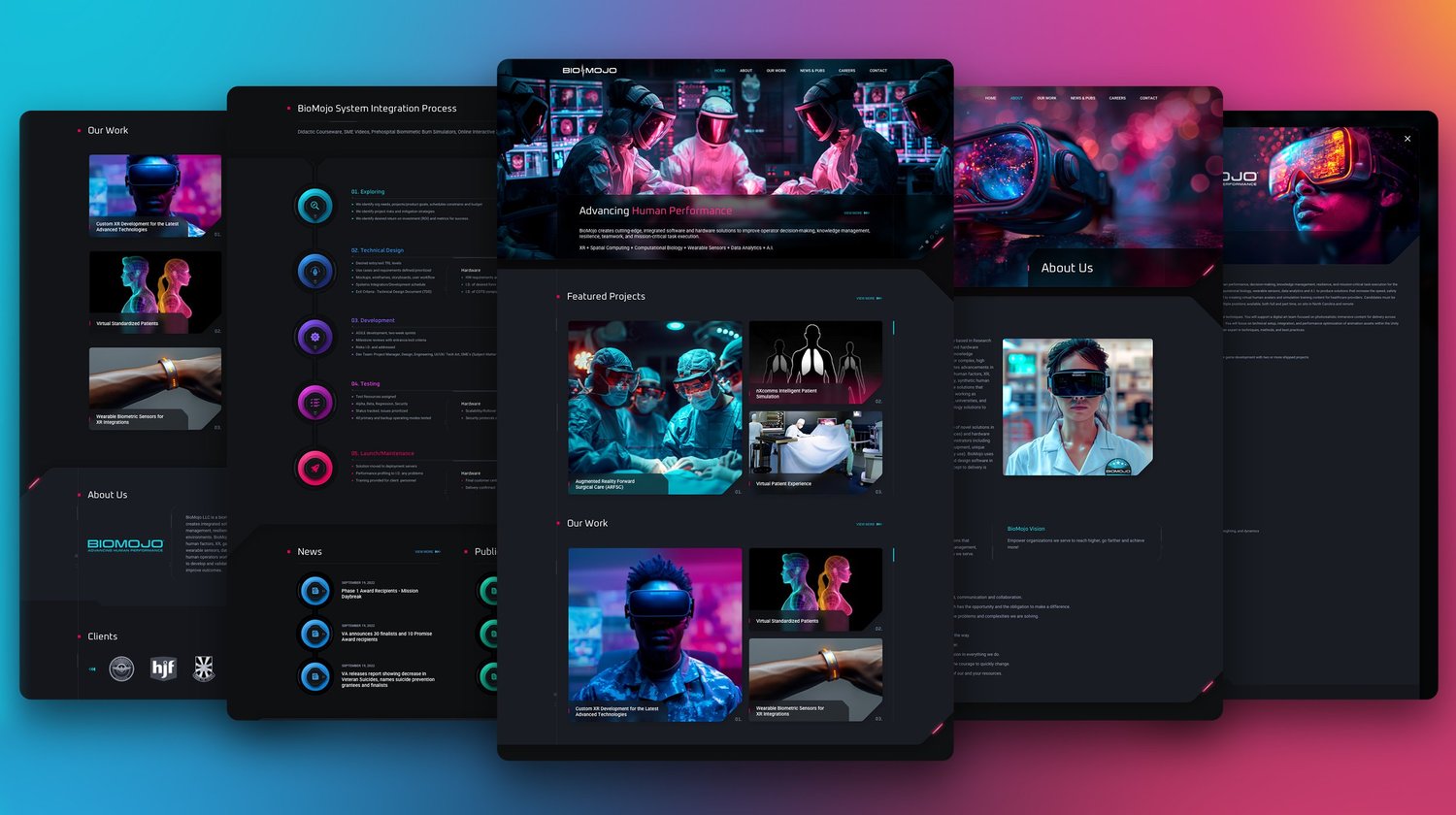
BioMojo
Corporate site for a biomedical firm working in XR, spatial computing, and simulation training.
View Project

GameIn
Esports platform interface covering team profiles, sponsorship marketplace, tournaments, and news.
View Project
Choosing the Right Web Design Firm
More Than a Portfolio. More Than a Website.
Choosing a web design firm is about more than comparing portfolios. The right partner needs to understand your business, your audience, the role your website plays in sales and marketing, and what needs to happen after the design is approved.
The Skins Factory is a web design firm specializing in custom websites that combine strong visual design, clear messaging, intuitive user experiences, responsive web design, SEO-conscious site architecture, and development through our trusted development partner. Design and development are treated as one connected process rather than two unrelated projects handed between vendors.
Web design firm cost can vary considerably depending on the number of pages, complexity of the website, custom functionality, ecommerce requirements, content needs, integrations, and the platform being used. We define those requirements before recommending an approach so the proposal reflects the actual project rather than forcing the website into an arbitrary package.
Responsive Web Design
One Site. Every Screen. No Compromises.
Responsive web design is not a phase we tack onto the end of a project. Layout behavior across breakpoints gets decided while the design is being made, because a site designed for desktop and then squeezed into a phone always looks like exactly that.
Scaling a large layout down creates problems that reflowing alone does not solve. So we customize the mobile experience rather than letting it inherit whatever the desktop design happens to produce. Parts of the interface get rebuilt for the smaller screen: what gets prioritized and what gets deferred, how navigation collapses without burying the paths that matter, how imagery crops instead of shrinking into illegibility, and how typography stays readable without forcing anyone to pinch and zoom.
Performance is part of it too. Images are sized and served appropriately per device, and load behavior is treated as part of the user experience, because the most carefully responsive layout in the world does not help if it arrives four seconds late on a phone connection. Every site we build is responsive by default. It is not a line item.
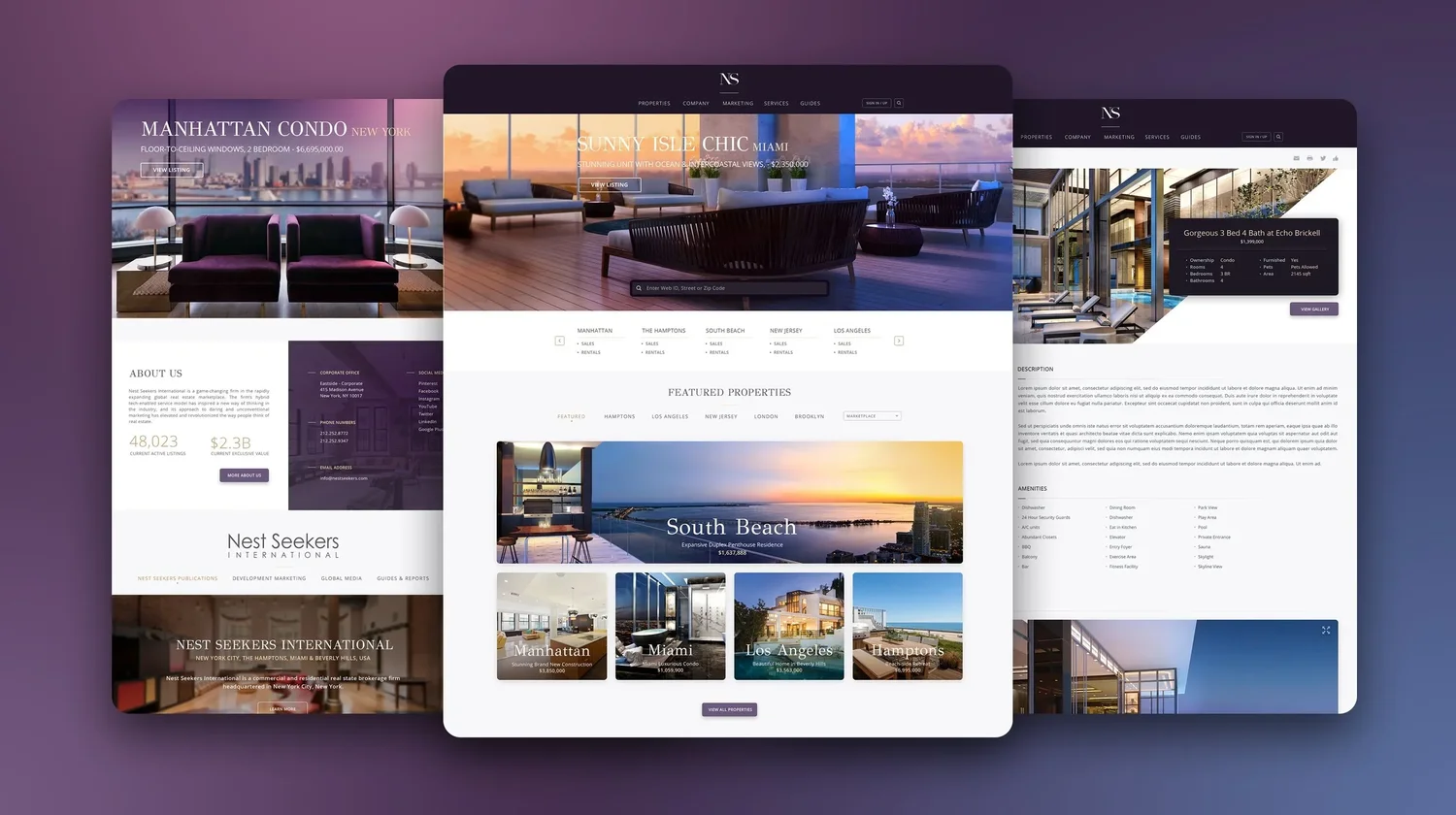
Nest Seekers
Responsive property listing pages for a luxury real estate brand, where imagery has to carry the sale on every screen size.
View Project
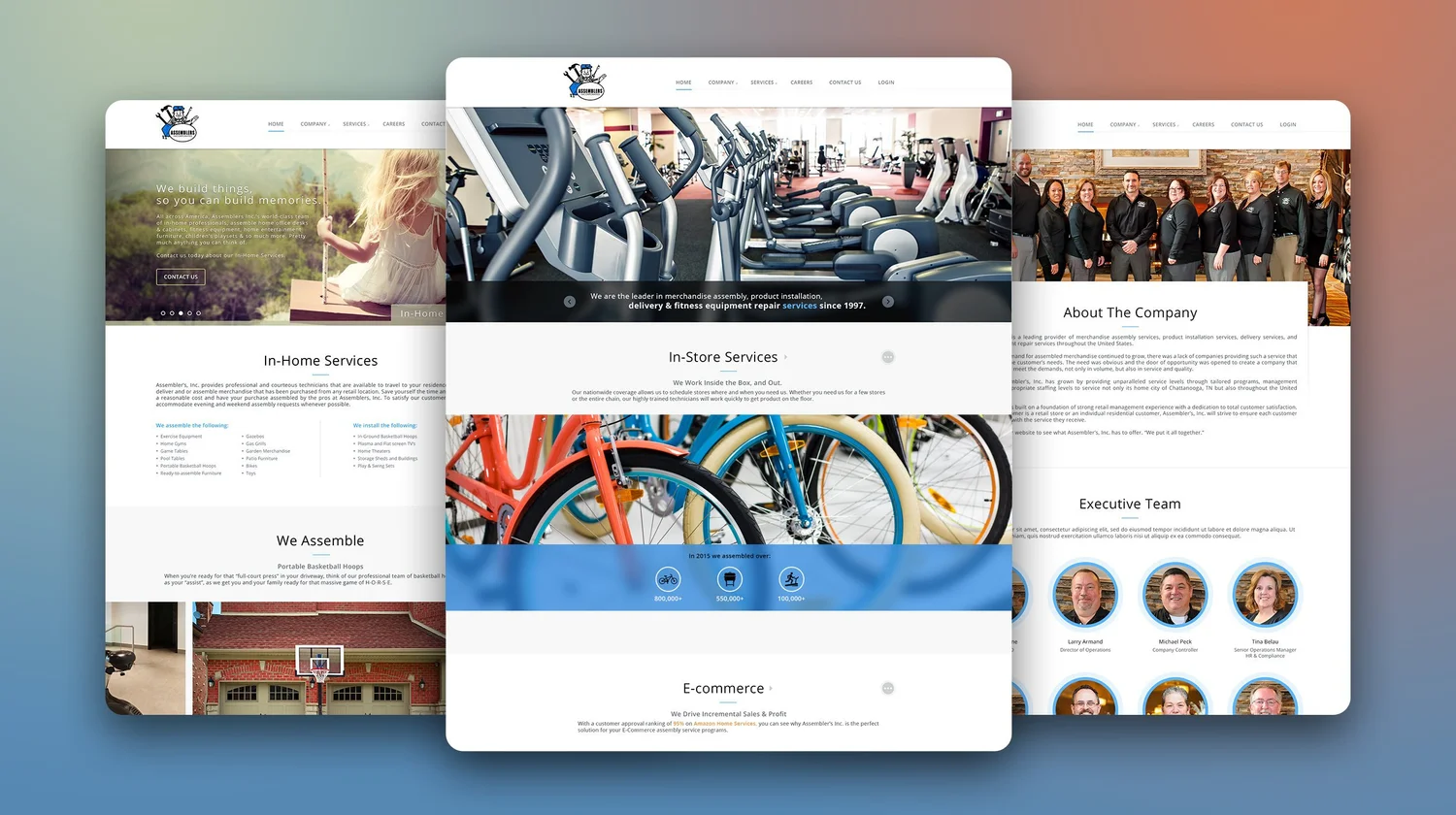
Assemblers Inc
Corporate site rebuilt for desktop and mobile, with the mobile experience designed rather than inherited.
View Project
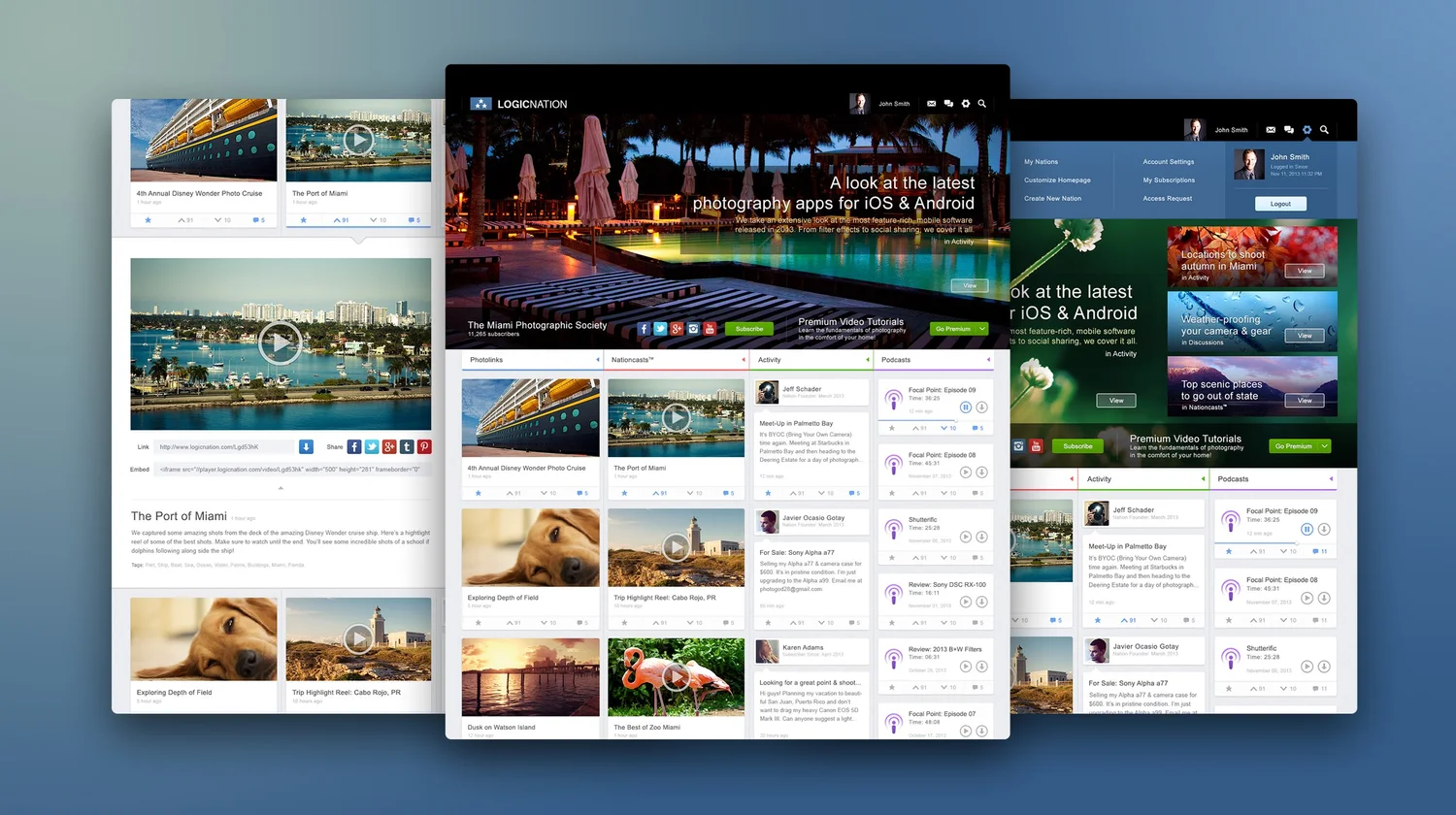
LogicNation
Social media platform interface, where feeds, profiles, and navigation each need their own mobile treatment.
View Project
Ecommerce Web Design
Storefronts Designed to Sell, Not Just Display
Ecommerce design lives or dies on the parts most templates handle badly. Category pages that make browsing feel like work. Product pages that bury the detail a buyer actually needs. Cart and account flows that introduce doubt at the exact moment someone is deciding to commit.
We designed the online music store for The Walt Disney Company, treating the storefront as a tactile, hardware-inspired interface that invited people to explore rather than scroll a grid. More recently we designed a new Shopify storefront for DTFsuperstore.com, a printing supply retailer that had been running a stock template. Discovery turned up something odd about the category: printing supply sites were almost entirely colorless, in an industry whose entire business is ink. We anchored the redesign in vibrant CMYK, with custom masthead imagery across the standalone and product category templates, so the storefront looked like it belonged to a company that sells color.
Shopify, WooCommerce, or something custom, the work underneath is the same. Make the catalog navigable, make the product feel worth buying, and remove every reason to hesitate before checkout.

Category Page Template
Grid and list views, a filter sidebar for faster product discovery, and breadcrumb navigation under the masthead.
View Full Image

Product Page Template
Shipping estimated on the page itself, a discount table for bulk orders, and legible product detail that does not make the buyer hunt.
View Full Image
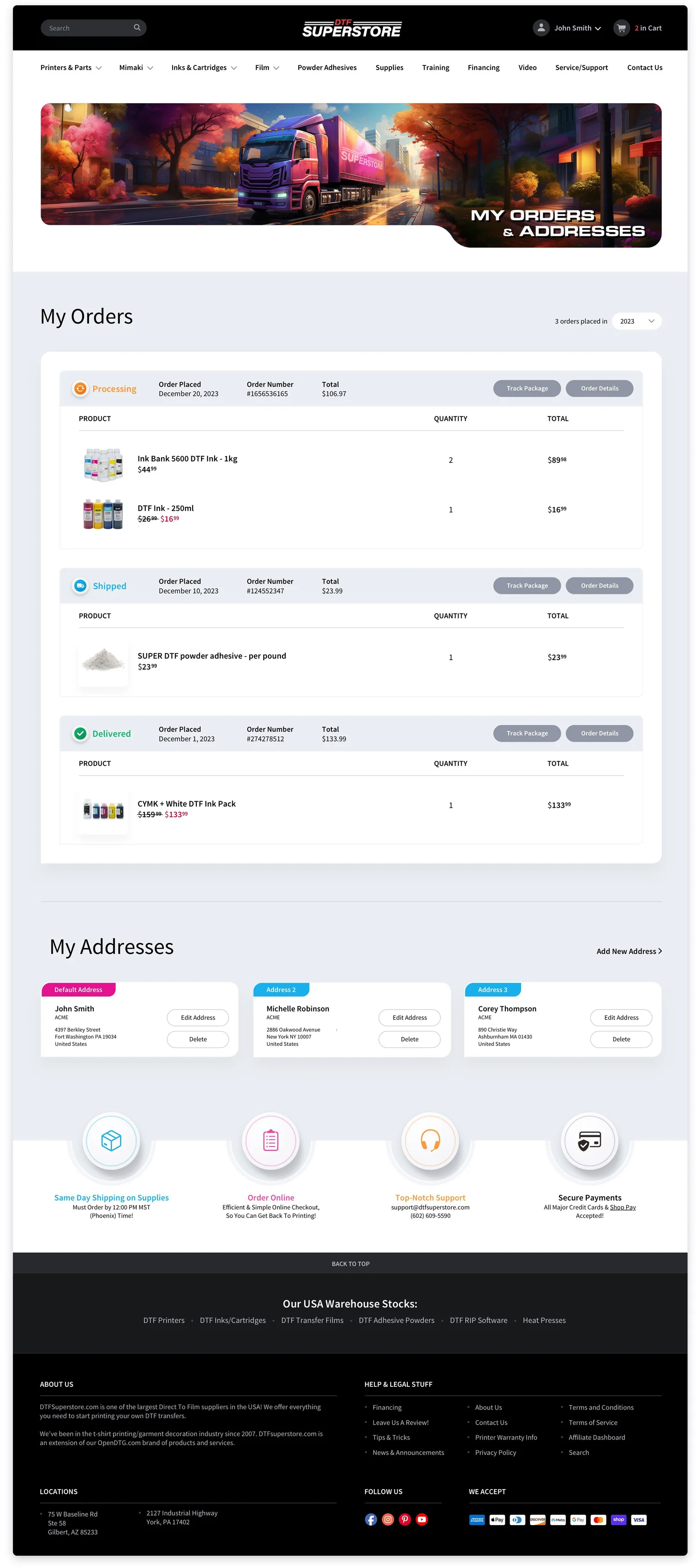
Orders & Addresses
Orders and addresses consolidated into one page, since orders belong to addresses and splitting them only adds clicks.
View Full Image
Web Application Design
When a Website Is Really a Product
An informational website and a web application are two different design problems wearing similar clothes. A website is built to be read. Someone arrives, scans, decides, and leaves, and the design has done its job if they understood you and took one action. A web application is built to be worked in. People log in, come back daily, and depend on it to get their jobs done. There the design has done its job only if they can finish what they came to do without friction.
That difference changes almost everything below the surface. A marketing site needs hierarchy, clear messaging, and a small number of obvious paths. An application needs navigation architecture that holds up under real complexity, dashboards that surface the right thing first, data density that stays legible, roles and permissions, and every state a screen can land in: empty, loading, error, partial, overloaded. Those states are where most application design quietly comes apart, and they barely exist on a marketing site.
This is our home ground. We have spent twenty-five years designing enterprise software, SaaS platforms, fintech and healthcare interfaces, and security dashboards, including browser-based applications running well past a hundred screens with every state and interaction defined.
If your project sits somewhere between a marketing site and a full application, say so on the first call. Scoping it correctly at the start is the difference between a project that lands and one that gets rebuilt a year later. We design the application, and development runs through our partner studio. There is more on how we work in our UI/UX design services, and more of the work itself in our UI/UX design portfolio.
Website Redesign
When the Site You Have Is Working Against You
Most companies do not come to us to build a first website. They come because the site they have no longer matches the company they have become, or because it looks dated next to competitors, or because traffic arrives and does nothing with it.
A redesign is a different engagement than a new build. There is existing content, existing search equity, existing URLs, and existing habits among the people who already use the site. Discarding all of it is the most common way a redesign goes sideways, and it is why some companies come out the other side with a better looking site and worse numbers.
So we start by working out what is actually wrong. Sometimes the visual design is the problem. Often it is structure, hierarchy, or messaging, and the design is only what made it visible. We audit what exists, keep what is working, protect search equity through the transition, and rebuild the rest. If you are not sure whether you need a redesign or a rebuild, that is a reasonable first conversation to have.
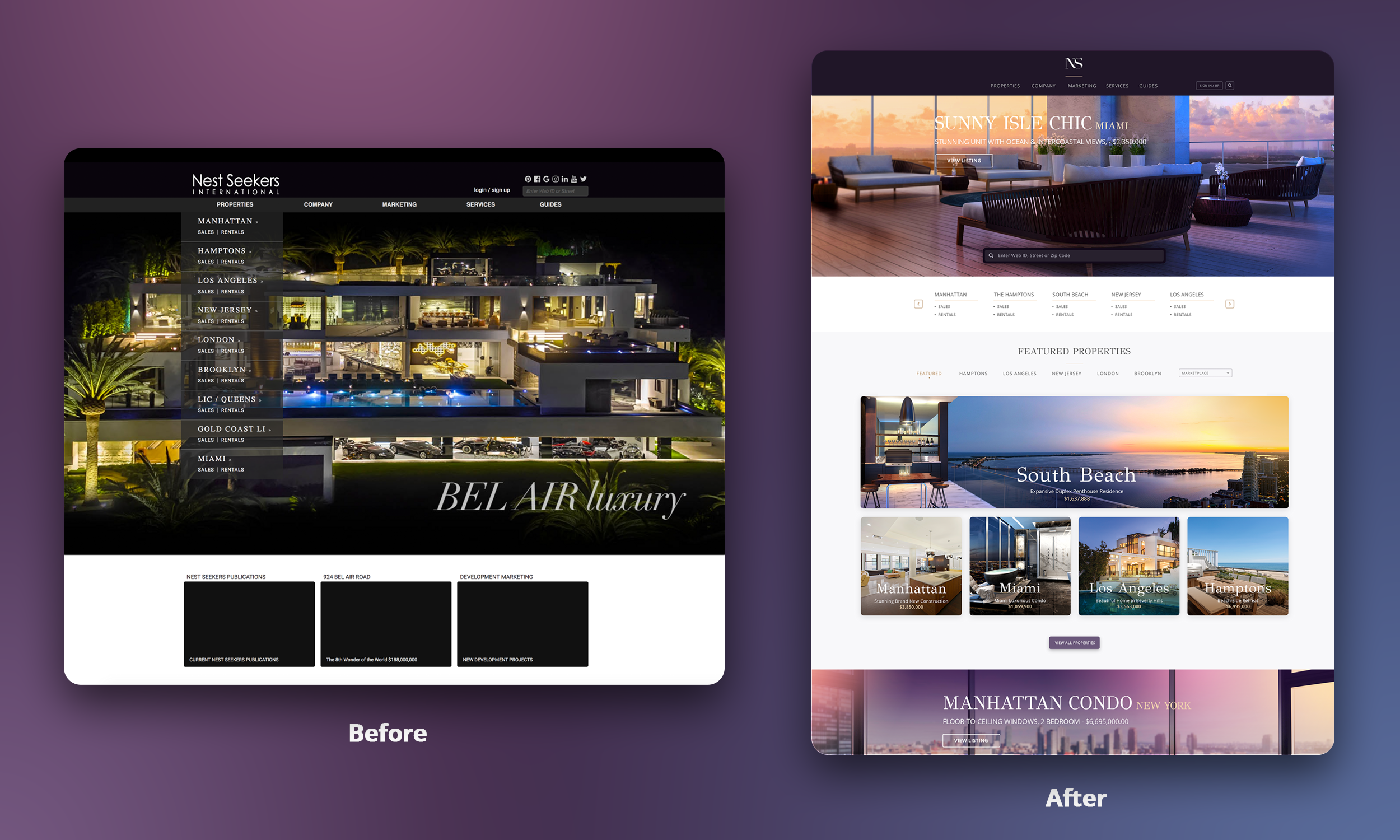
Before and after: a luxury real estate property listing page, rebuilt around the imagery that actually sells the property.
Web Development
Built on Whatever the Project Actually Needs
A lot of agencies build on one platform because it is the only platform they know, then work to convince you it is the right choice. We start from the opposite direction. What are you trying to do, who has to maintain it after launch, and what does it need to become in three years? The answer to that decides the stack, not the other way around.
WordPress remains the right call for a large share of content-driven sites, and we build on it often. It is flexible, well supported, strong on SEO, and easy for a non-technical team to run day to day. That covers theme development, plugin selection and configuration, security hardening, and performance tuning, rather than stacking on whatever plugin ranks first in a search.
But WordPress is one option, not the only one. Development runs through a partner studio we have worked with for years, which means the platform gets chosen on the merits rather than on what any one person happens to know. Shopify or WooCommerce when the project is ecommerce. A custom build when a site has outgrown what a CMS can hold. If your site is really an application wearing a website's clothes, we will tell you that, and we will build it accordingly.
Design and development run through one relationship, with us accountable for both. You are not the one translating between a design vendor and a development shop, and the site that ships is the site that was designed.
Web Design and SEO
Built to Be Found, Not Just Seen
So you have a great looking website designed by The Skins Factory but you want to get noticed on search engines. SEO (Search Engine Optimization) is essential because it improves the visibility of a website, making it easier for potential customers to find. By optimizing content with relevant keywords, improving site structure, and enhancing user experience, businesses can rank higher on search engine results pages (SERPs).
This increases organic traffic, which is often more cost-effective than paid advertising. SEO helps build credibility, drive targeted traffic, and generate leads, ultimately contributing to a stronger online presence and higher conversion rates.
Frequently Asked Questions
Web Design, Development, and What It Costs
How much does a website cost?
It depends on scope, and any agency that gives you a number before understanding your project is guessing. A marketing site with eight pages and a web application with user accounts and dashboards are not the same engagement, and pricing them the same way would be dishonest. What we can tell you is how we price. The Skins Factory sits on the low side of mid-tier for a studio with twenty-five years of enterprise experience. We have run as a work-from-home studio since 2000, our overhead is low, and that saving goes to clients rather than to office space.
How do you structure pricing?
Two ways, and you choose which fits. Fixed-cost projects: we review the full scope, estimate the hours, and give you one number agreed before work begins, with no scope creep billed quietly on the back end. Time blocks: you prepay a block of forty or more hours, we deduct against it as work is completed, and usage is tracked live in a shared spreadsheet your team can open at any time. When the block runs out, work pauses until a new one is added. Nothing gets invoiced after the fact. If an agency cannot tell you exactly where your budget stands at any given moment, treat that as a warning.
What is the hourly rate for website design?
As a 2026 market benchmark, freelance designers typically run $50 to $150 per hour, mid-tier agencies $150 to $250, and senior boutique studios $200 to $350. We price on the low side of mid-tier despite sitting in the senior boutique category on experience. That said, most of our web work is quoted as a fixed cost rather than billed hourly, because a fixed number puts the estimating risk on us instead of on you.
Why is custom web design more expensive than a template?
Because you are paying for decisions, not pixels. A template is a layout somebody else designed for an unknown business with unknown goals. Custom design starts from what your company actually does, who it is trying to reach, and what you need a visitor to do. Templates make sense for some projects and we will say so if yours is one of them. But if your site has to differentiate you in a crowded market, survive a brand review, or support a real sales process, a template will limit you in ways that get expensive later.
What platforms do you build on?
WordPress and WooCommerce, Shopify for ecommerce, and fully custom builds when a site has outgrown what a content management system can hold. Development runs through a partner studio we have worked with for years, so the platform gets chosen on the merits of your project rather than on what any one person happens to know. The questions that decide it are what the site has to do, who maintains it after launch, and what it needs to become in three years.
Do you design ecommerce websites?
Yes. That covers storefront and product page design, category and browsing structure, cart and account flows, and the platform build itself. Ecommerce design lives or dies on the parts most templates handle badly, which is exactly where custom design earns its cost back.
Do you redesign existing websites, or only build new ones?
Both, and redesigns are a large share of our work. A redesign needs different care than a new build, particularly around preserving search equity and not discarding what is already working. We audit the existing site first rather than starting from a blank page, because the problem is often structure, hierarchy, or messaging rather than the visual design that made it visible.
Do you handle both design and development?
Design is ours. Development runs through a partner studio we have worked with for years, and we stay accountable for both. That matters because the usual alternative is hiring a design vendor and a development vendor separately and then spending your own time mediating between two companies who each think the other is wrong. Here it is one relationship, and the site that ships is the site that was designed.
Can you design our app and our website?
Yes, and it is one of the more common reasons companies come to us. A team that hires a product designer for their application and then sources a marketing site somewhere else usually ends up with two things that do not look like the same company. We design both, so the site that sells the product and the product itself share a visual language.
How many rounds of revisions are included?
Typically two to three, agreed upfront based on project scope. A revision round means consolidated feedback delivered in one pass, not a rolling stream of individual change requests. We do not offer unlimited revisions, and we would be suspicious of any agency that does. Unlimited rounds are either priced in somewhere you cannot see, or they create a dynamic where nothing ever gets finalized. If new direction comes up after the revisions are used, that becomes a scope conversation costed out separately, not a surprise charge.
Do you work with small businesses, or only large companies?
Both. We have designed inside enterprise brand systems with style guides and legal review, and we have designed first websites for companies that had never had one. Smaller clients get the same senior attention, because there is no junior team here to hand the work down to and no account layer between you and the people doing the work.
Do you do SEO?
We build sites to be found, which is a different claim than running an ongoing SEO campaign. Site structure, page hierarchy, semantic markup, load performance, and content organization all get decided during design, and those are the foundational pieces most agencies leave for someone else to fix afterward. Fixing them later costs more than getting them right the first time.
Ready for a new website? Let us know.
Thank you for reaching out.
We will be in touch within one business day.